Meet the crystal

Forever SnS Crystal Passport
Rose Quartz
Pronounced: ROHZ KWORTS
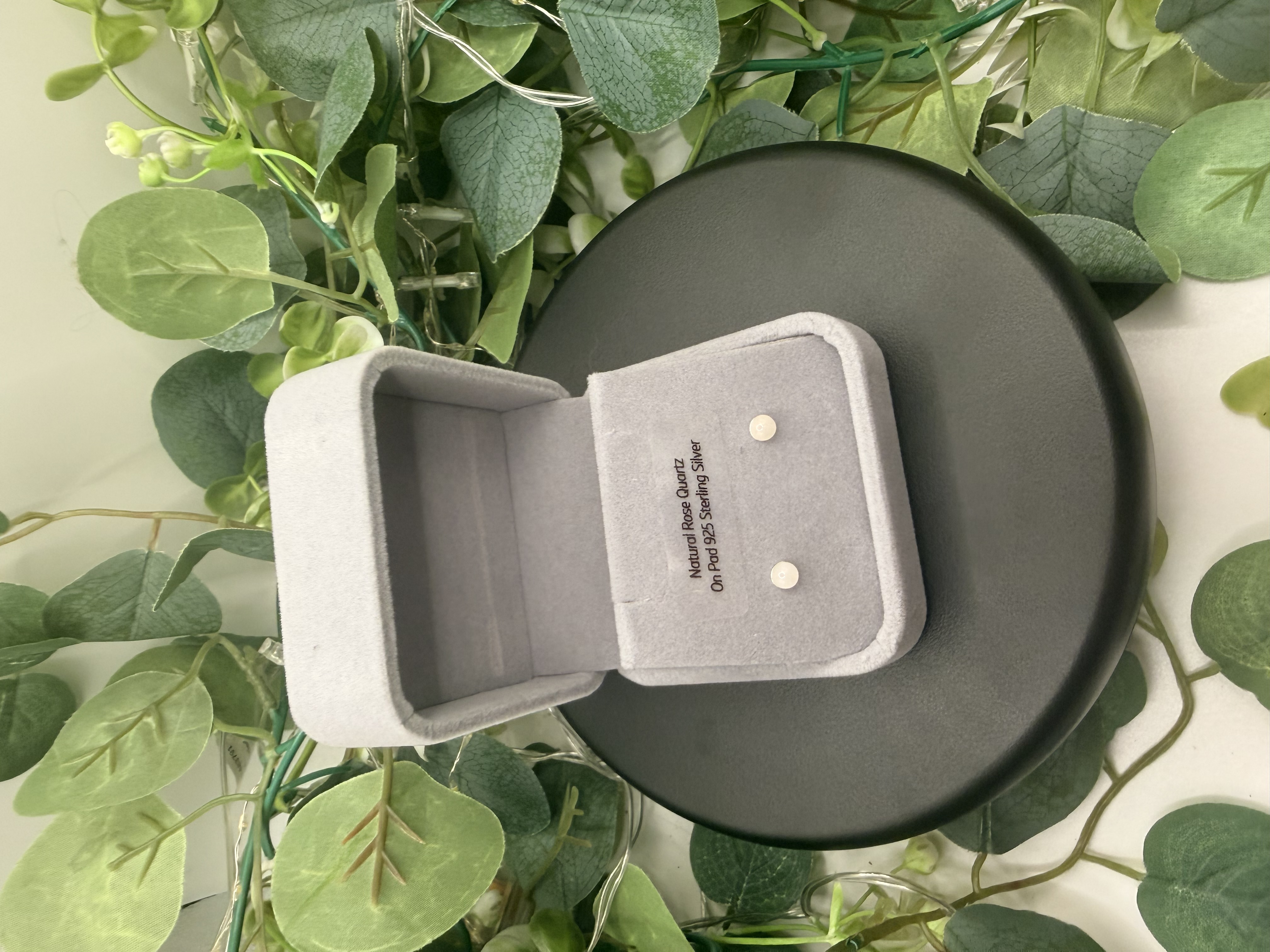
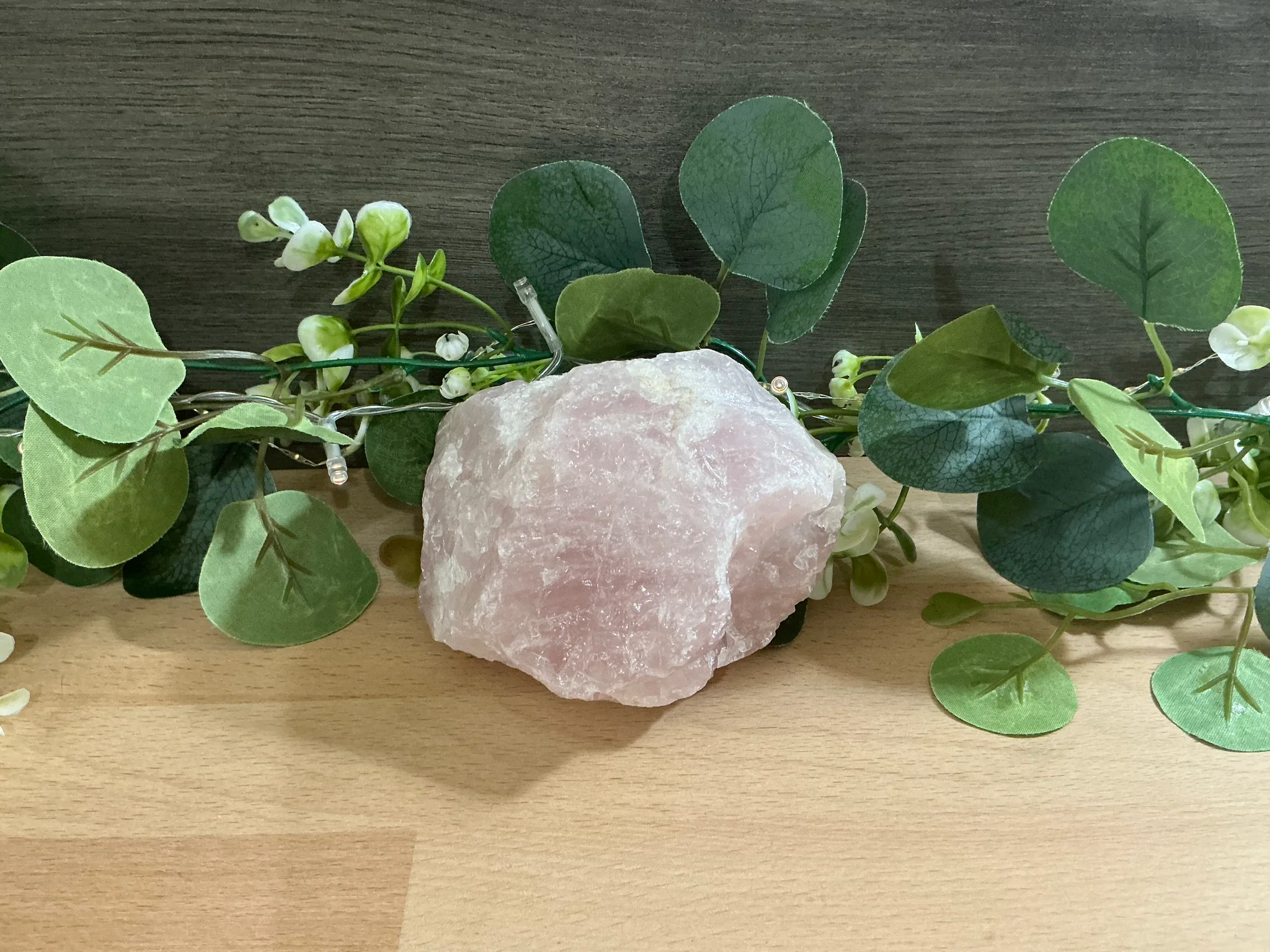
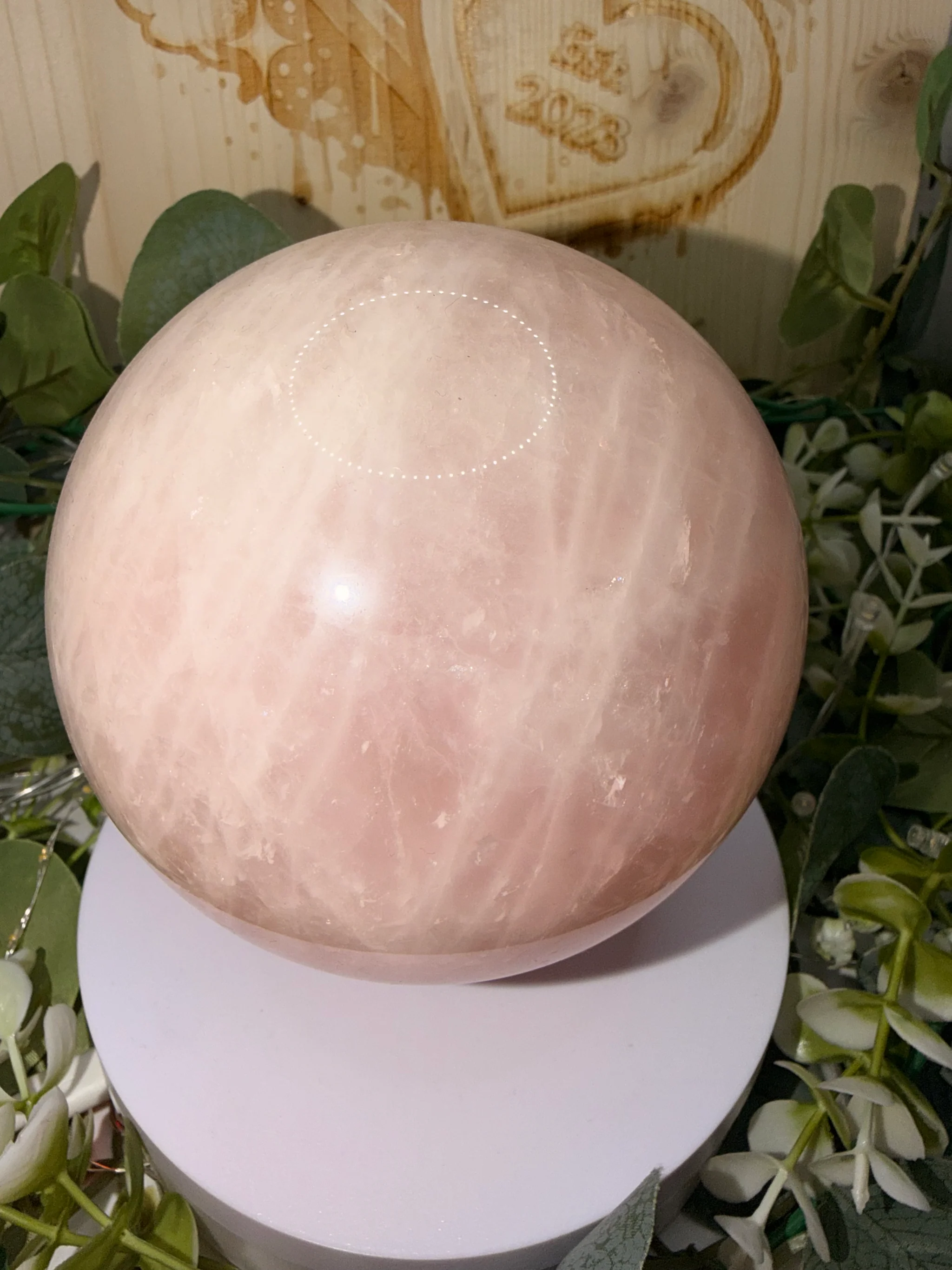
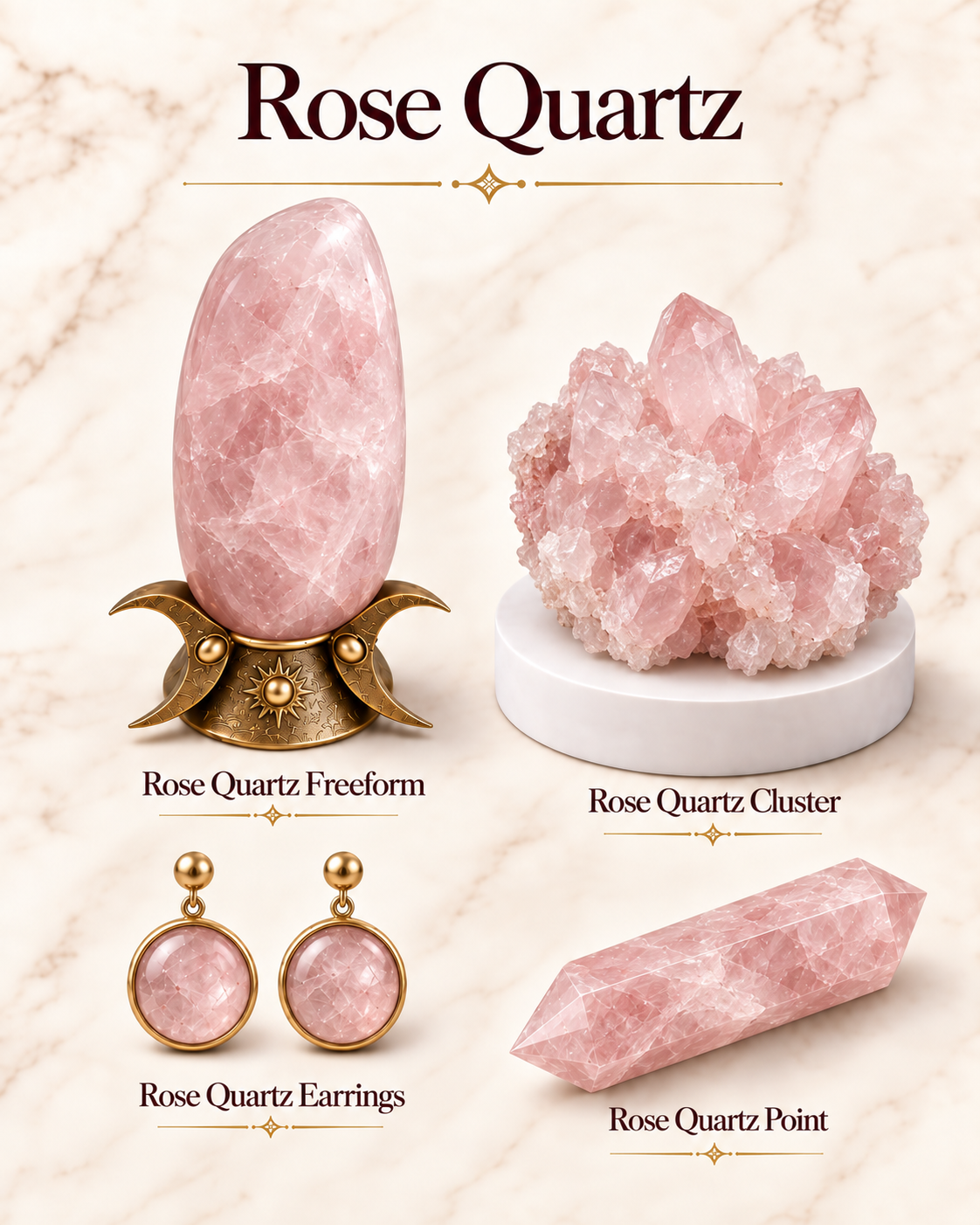
Rose Quartz is the soft pink variety of quartz, loved for its delicate colouring, smooth translucency and gentle natural appearance. Its shades range from the palest blush pink to deeper rose and lavender-pink tones, making it one of the most recognisable varieties of quartz.
CWExplore this passport
Showing Science & Formation
Scientific passport
The mineral facts
Observable and measurable properties used to describe and identify this mineral.
- Chemical formula
- SiO₂
- Mineral class
- Silicate — Quartz
- Crystal system
- Trigonal
- Mohs hardness
- 7
- Lustre
- Vitreous
- Streak
- White
- Specific gravity
- Approximately 2.65
- Transparency
- Usually translucent; occasionally transparent to nearly opaque
Common colours
Pale pink, rose pink, lavender-pink, reddish-pink and very pale blush
Cleavage and fracture
No true cleavage; typically conchoidal to uneven fracture.
From the Earth
How it forms
The geological processes that create this crystal over time.
Formation
Its geological story
Rose Quartz commonly forms in silica-rich geological environments, particularly within granitic pegmatites and some hydrothermal quartz deposits. As silica-rich fluids or melts cool, quartz crystallises within fractures, cavities and pegmatite bodies. Unlike many varieties of quartz, Rose Quartz most commonly develops as massive material rather than clearly defined individual crystals. Its pink colouring is associated with microscopic features and trace components incorporated during its formation.
A closer look
Scientific notes
Rose Quartz is a variety of crystalline quartz composed of silicon dioxide. Although its colour was once commonly attributed simply to trace amounts of titanium, iron or manganese, modern mineralogical research has shown that the colour of much massive Rose Quartz is associated with extremely fine fibrous inclusions of a pink mineral phase related to dumortierite. These microscopic inclusions scatter and absorb light, helping produce the characteristic cloudy pink appearance. A distinction is sometimes made between traditional massive Rose Quartz and rare transparent pink quartz crystals. Transparent crystalline pink quartz can have a different colour mechanism from massive Rose Quartz and may be referred to simply as Pink Quartz by mineralogists. Some Rose Quartz specimens display asterism, producing a six-rayed star when viewed under a strong point light source. This phenomenon is associated with oriented microscopic inclusions inside the quartz.
Passport stamps
Where in the world?
Important countries, regions and mineral localities connected with this crystal.
Brazil
Berilo Branco Claim, Sapucaia do Norte, Galiléia
Minas Gerais
Minas Gerais is one of the world's most important regions for gem-quality quartz. The Berilo Branco locality is particularly famous for exceptional crystallised pink quartz specimens and is recognised as a classic, world-class locality. It produced the celebrated “Van Allen Belt” specimen and helps demonstrate the distinction between common massive Rose Quartz and the much rarer transparent pink quartz crystals.
Madagascar
Tsaramanga Pegmatite, Mahaiza, Betafo District
Vakinankaratra
Madagascar is an internationally important source of Rose Quartz and contains numerous Rose Quartz-bearing pegmatites. The Vakinankaratra region around Betafo and Antsirabe is especially well known for pegmatite minerals, with Rose Quartz documented at several individual deposits. Madagascar has also produced notable asteriated material in which microscopic oriented inclusions create a star effect when suitably cut and polished.
United States
Pink Rose Lode Quarry (Scott Rose Quartz Mine), Custer Mining District
South Dakota
The Black Hills of South Dakota contain numerous Rose Quartz-bearing pegmatites. The Pink Rose Lode Quarry is a particularly rich occurrence where massive Rose Quartz is extremely common, making the Custer district an important North American locality for the material.
United States
Rose Quartz Crystal Locality (Pegmatite 24), Newry, Oxford County
Maine
Newry is a classic American pegmatite district known for an exceptional range of minerals. Pegmatite 24 is specifically recognised as a Rose Quartz crystal locality and is significant because well-formed pink quartz crystals are much rarer than the massive Rose Quartz normally encountered.
Crystal Detective
Look closely. Ask better questions.
Safe observations at home are separated from professional laboratory identification. No single home test can prove every specimen's identity or origin.
Safe checks at home
Examine the colour first. Natural Rose Quartz commonly has a soft, slightly cloudy pink appearance rather than an extremely bright or perfectly uniform colour. Use a magnifying glass to look for natural internal veils, fractures, inclusions and variations in colour. Genuine Rose Quartz often has subtle internal cloudiness. Natural quartz should feel relatively hard and substantial, but avoid carrying out scratch tests on finished or valuable pieces. Glass imitations may contain rounded bubbles and may appear unnaturally clear or uniform. Dyed material may show stronger colour concentrated around cracks or surface imperfections. A visual check can provide useful clues but cannot guarantee identification.
Professional methods
Professional identification may include refractive-index measurement, specific-gravity testing, polarised-light microscopy and examination of optical properties. Raman spectroscopy can confirm quartz non-destructively, while X-ray diffraction can identify the crystalline structure. Advanced microscopy and spectroscopy can also be used to investigate microscopic inclusions and the origin of the pink colour. Gemological laboratories may use several techniques together when determining whether a specimen is natural, treated or an imitation. Common imitations and treatments Rose Quartz is commonly imitated by pink glass, dyed quartz, resin and other manufactured materials. Glass may contain rounded gas bubbles and can lack the natural internal structures expected in quartz. Resin or plastic imitations are usually considerably softer and lighter. Dyed quartz may show unusually intense colouring or concentrations of dye within cracks and surface-reaching fractures. Most natural Rose Quartz does not require treatment, although colour enhancement and dyed material can occur commercially. Extremely bright or unusually uniform pink material should therefore be examined carefully. Some synthetic or laboratory-grown quartz can also be produced, although natural massive Rose Quartz remains widely available and relatively common.
Imitations and treatments
Rose Quartz is commonly imitated by pink glass, dyed quartz, resin and other manufactured materials. Glass may contain rounded gas bubbles and can lack the natural internal structures expected in quartz. Resin or plastic imitations are usually considerably softer and lighter. Dyed quartz may show unusually intense colouring or concentrations of dye within cracks and surface-reaching fractures. Most natural Rose Quartz does not require treatment, although colour enhancement and dyed material can occur commercially. Extremely bright or unusually uniform pink material should therefore be examined carefully. Some synthetic or laboratory-grown quartz can also be produced, although natural massive Rose Quartz remains widely available and relatively common.
The Mythical Library
Stories carried through time
Folklore can be enjoyed without confusing it with evidence. Where a popular tale is a later retelling, the passport says so.
The Mythical Library
Rose Quartz
Choose a book to enter the full-screen reader.
Beliefs, traditions and cultural context
What people have believed
Rose Quartz has been used as a decorative and ornamental stone for thousands of years, with quartz and pink stone objects appearing in several ancient cultures. However, specific modern claims about Rose Quartz should not automatically be attributed to ancient civilisations unless there is reliable historical evidence supporting them. In contemporary crystal traditions, Rose Quartz is strongly associated with love, compassion, emotional warmth, friendship and self-kindness. It is commonly linked with the Heart Chakra and is often used symbolically in meditation, relationship rituals and personal reflection. Modern crystal literature frequently describes Rose Quartz as a stone connected with romantic love as well as wider ideas of affection, forgiveness and emotional harmony. These associations belong to modern spiritual practice, symbolism and crystal folklore. They are not scientifically established medical or psychological effects and should not be interpreted as treatment for any health condition.
Handle thoughtfully
Safety notes
Finished and polished Rose Quartz is generally safe to handle normally. However, quartz contains crystalline silica. Cutting, grinding, drilling or crushing Rose Quartz can generate fine silica dust, which is hazardous when inhaled and can cause serious lung disease after sufficient exposure. Lapidary work should therefore use appropriate dust extraction, wet-cutting methods, eye protection and suitable respiratory protection. Broken pieces can also form sharp edges, and small specimens should be kept away from young children and pets where there is an ingestion or choking risk.
Keep it beautiful
Care and cleaning
Rose Quartz is relatively durable because of its Mohs hardness of 7, but it can still chip or fracture if dropped. Clean polished specimens using lukewarm water, mild soap and a soft cloth or brush, then rinse and dry carefully. Avoid harsh chemicals and sudden temperature changes. Ultrasonic cleaning may be unsuitable for heavily fractured specimens, and steam cleaning should be avoided where fractures or inclusions could make the material vulnerable. Prolonged strong sunlight may gradually affect the colour of some Rose Quartz specimens, so valuable pieces are best displayed away from continuous intense direct sunlight.
Follow the evidence
Sources and further reading
We show the references used while researching this passport so visitors can check important claims and continue learning.
- 1
Overview
Rose Quartz
Gemological Institute of America · Gemological Institute of America (GIA)
Primary gemological overview used for Rose Quartz's identification as a quartz variety, chemical composition, Mohs hardness, specific gravity, colour range, translucence, massive habit and ability to display asterism.
Checked 11 Sept 2026
- 2
Science
Rose Quartz Description
Gemological Institute of America · Gemological Institute of America (GIA)
Used for Rose Quartz formation, typical massive habit, pegmatite and hydrothermal occurrence, microscopic fibrous inclusions, colour mechanism, major sources and the distinction between massive Rose Quartz and rare transparent crystalline pink quartz.
Checked 11 Sept 2026
- 3
Localities
Rose Quartz — Berilo Branco Claim, Minas Gerais, Brazil
Mindat.org contributors · Mindat.org / Hudson Institute of Mineralogy
Supports the Brazilian locality entry. Mindat identifies the Berilo Branco Claim as a classic and world-class locality for Rose Quartz/pink quartz and records its association with notable crystallised specimens.
Checked 11 Sept 2026
- 4
Localities
Rose Quartz localities — Madagascar
Mindat.org contributors · Mindat.org / Hudson Institute of Mineralogy
Supports the Madagascar locality information. Mindat records Rose Quartz from numerous localities across Madagascar, including multiple pegmatites within the Vakinankaratra region.
Checked 11 Sept 2026
- 5
Localities
Pink Rose Lode Quarry, Custer County, South Dakota, USA
Mindat.org contributors · Mindat.org / Hudson Institute of Mineralogy
Supports the South Dakota locality entry. Rose Quartz is recorded as extremely common at the Pink Rose Lode Quarry, with the occurrence considered important for the variety.
Checked 11 Sept 2026
- 6
Home identification
Rose Quartz Buyer's Guide
Gemological Institute of America · Gemological Institute of America (GIA)
Used for practical gemological information concerning colour, clarity, natural characteristics and professional identification. GIA notes that laboratory identification can determine whether material is natural or laboratory-grown and identify detectable treatments.
Checked 11 Sept 2026
- 7
Laboratory identification
Fibrous nanoinclusions in massive rose quartz: The origin of rose coloration
Julia S. Goreva, Chi Ma and George R. Rossman · American Mineralogist / Mineralogical Society of America
Peer-reviewed scientific research investigating the microscopic fibres responsible for the colour of massive Rose Quartz. Researchers studied material from 29 localities and concluded that nanofibrous inclusions closely related to dumortierite are responsible for the characteristic pink colour.
Checked 11 Sept 2026
- 8
Fakes and treatments
Rose Quartz Care and Cleaning
Gemological Institute of America · Gemological Institute of America (GIA)
Used to document recognised Rose Quartz treatment information. GIA states that Rose Quartz may occasionally be irradiated to intensify its colour. The source is also used for hardness, stability and cleaning guidance.
Checked 11 Sept 2026
- 9
Myths and folklore
Forever SnS Mythical Library — Original Rose Quartz Folklore
Forever SnS · Forever SnS Ltd · 2026
The First Pink Light and The Seal That Remembered a Promise are original contemporary folklore created for the Forever SnS Mythical Library. The stories draw inspiration from Rose Quartz's real mineralogy and documented historical use but are not presented as genuine ancient stories, archaeological traditions or inherited cultural legends.
Checked 11 Sept 2026
- 10
Beliefs and traditions
Rose Quartz History and Lore
Gemological Institute of America · Gemological Institute of America (GIA)
Used for documented historical and traditional information. GIA reports ancient Rose Quartz beads from Mesopotamia, Assyrian Rose Quartz jewellery, Roman use of the stone for seals and historical beliefs associated with quartz. These accounts are recorded as historical traditions and are not presented as scientific or medical effects.
Checked 11 Sept 2026
- 11
Beliefs and traditions
The Crystal Bible Volume 1
Judy Hall · Godsfield Press / Hachette UK · 2023
Used only as a source for contemporary crystal spirituality and modern metaphysical interpretations of Rose Quartz. It documents traditions and beliefs rather than providing scientific evidence, and no spiritual or healing claim from this source is presented as medically established fact.
Checked 11 Sept 2026
- 12
Safety and care
Rose Quartz Care and Cleaning
Gemological Institute of America · Gemological Institute of America (GIA)
Used for routine Rose Quartz care. GIA gives Rose Quartz a Mohs hardness of 7, describes it as generally stable to light and heat, recommends warm soapy water and advises against ultrasonic and steam cleaning.
Checked 11 Sept 2026
- 13
Safety and care
Silica, Crystalline, Mixed Respirable — Quartz, Cristobalite, Tridymite
Occupational Safety and Health Administration · U.S. Department of Labor — OSHA
Used specifically for the warning concerning respirable crystalline silica generated when quartz is cut, ground, drilled or crushed. This hazard relates to airborne fine quartz dust and does not mean that an intact polished Rose Quartz specimen is hazardous to handle normally.
Checked 11 Sept 2026
From the Forever SnS collection
Shop products featuring Rose Quartz
Each listing shows the actual product details, photographs and current availability.
Passport complete