You were here at the beginning

Some beginnings deserve
something extraordinary.

Thank you for joining Forever SnS before our launch. This exclusive collection is our gift to you — yours to keep, forever.

Rosefire Phoenix

Rosefire Phoenix

Rose, amethyst & a little magic

Midnight Phoenix

Midnight Phoenix

Sapphire light & midnight wings

2 companions · 2 banners · 2 backgrounds
2 borders · 2 Sparks · 2 chat colours

Made for our early birds. Never available to accounts created after launch.

A small family-run business creating beautiful, meaningful gifts

Jewellery • Crystals • STL Downloads

Forever SnS Crystal Passport

Ocean Jasper

Pronounced: OH-shun JAS-per

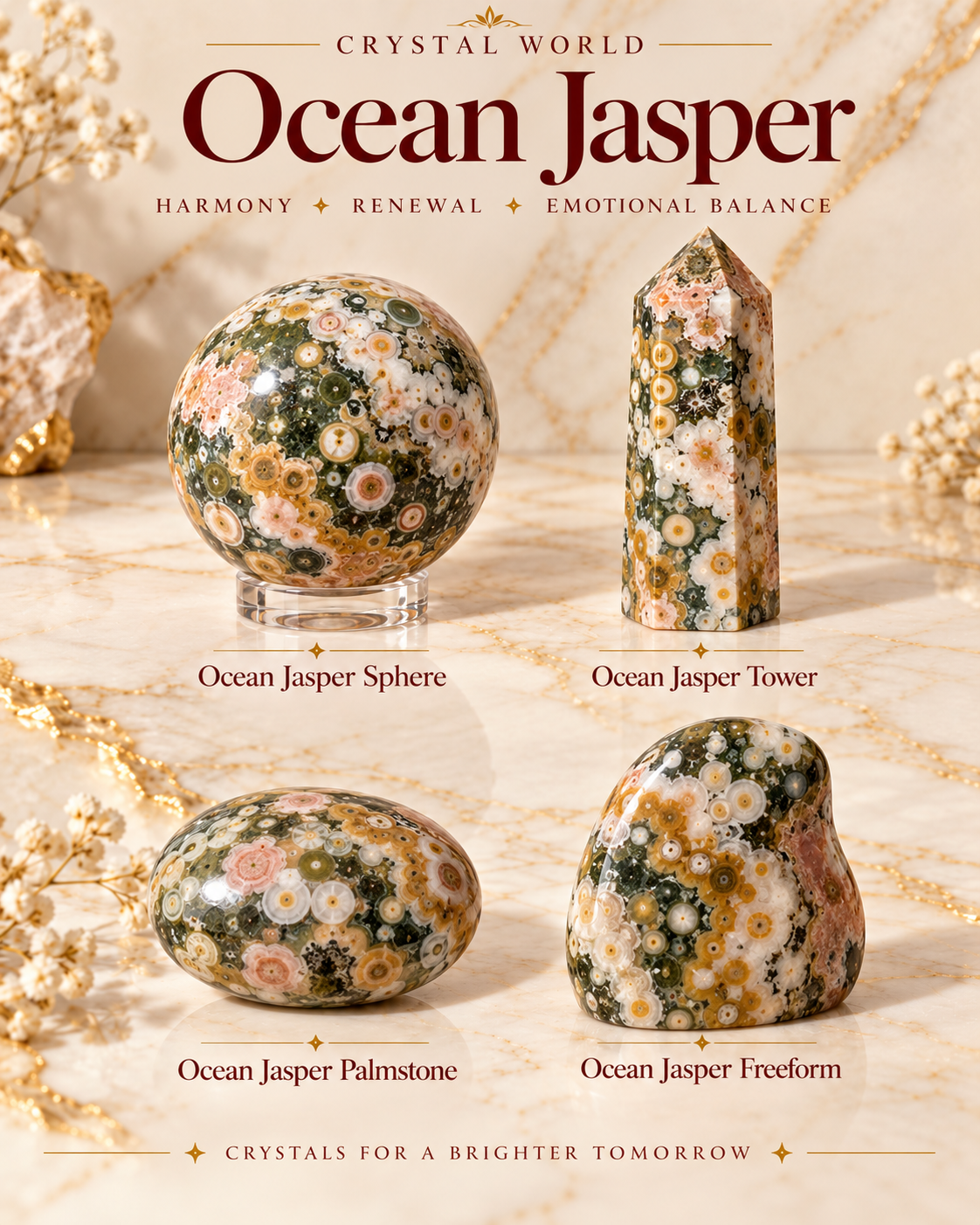
Ocean Jasper is a Madagascan trade name for orbicular or spherulitic chalcedony-rich material, recognised for its rounded “orb” patterns, colourful banding and occasional druzy cavities.

Formula: SiO₂Mohs hardness: 6.5–7System: Trigonal
Ocean JasperCW

Meet the crystal

About Ocean Jasper

Ocean Jasper is a popular trade name for a distinctive Madagascan ornamental stone characterised by rounded orb-like patterns, colourful banding and occasional pockets of sparkling druzy Quartz. Despite the name, Ocean Jasper is not a separate mineral species. Mineralogically, it is best described as orbicular or spherulitic chalcedony-rich material belonging to the Quartz family. Its famous circular patterns form through radial or spherulitic growth structures, where silica-rich material develops around small centres or seed crystals. When cut and polished, these structures appear as rings, circles, eyes and layered orbs. Classic Ocean Jasper comes from northwestern Madagascar, particularly around Marovato and the nearby Kabamby area in the Analalava District of the Sofia Region. The Marovato occurrence became especially famous because some material was exposed close to the shoreline and could historically be reached more easily at low tide. This association with the coast helped inspire the commercial name Ocean Jasper. Ocean Jasper can occur in many colours, including green, cream, white, yellow, pink, red, brown and grey, often within the same piece. The trade name is strongly associated with the Madagascan deposits, so similar-looking orbicular jaspers from other countries should not automatically be labelled Ocean Jasper.

Explore this passport

Showing Science & Formation

Scientific passport

The mineral facts

Observable and measurable properties used to describe and identify this mineral.

Chemical formula
SiO₂
Mineral class
Silicate — Quartz family
Crystal system
Trigonal
Mohs hardness
6.5–7
Lustre
Vitreous to waxy
Streak
White
Specific gravity
Approximately 2.6
Transparency
Opaque to translucent

Common colours

Green, cream, white, yellow, pink, red, brown and grey

Cleavage and fracture

No true cleavage; conchoidal to uneven fracture.

From the Earth

How it forms

The geological processes that create this crystal over time.

Formation

Its geological story

Ocean Jasper is a trade name rather than a recognised mineral species. Mindat treats it as a synonym of Orbicular Jasper and describes it as a spherulitic variety of Chalcedony. Its characteristic rounded patterns are caused by radial or spherulitic mineral growth rather than fossil organisms. The name Ocean Jasper is especially associated with material from northwestern Madagascar, particularly Marovato and nearby deposits.

A closer look

Scientific notes

Ocean Jasper is a trade name rather than a recognised mineral species. Mindat treats it as a synonym of Orbicular Jasper and describes it as a spherulitic variety of Chalcedony. Its characteristic rounded patterns are caused by radial or spherulitic mineral growth rather than fossil organisms. The name Ocean Jasper is especially associated with material from northwestern Madagascar, particularly Marovato and nearby deposits.

Passport complete

Who shall we meet next?

Return to Crystal World