You were here at the beginning

Some beginnings deserve
something extraordinary.

Thank you for joining Forever SnS before our launch. This exclusive collection is our gift to you — yours to keep, forever.

Rosefire Phoenix

Rosefire Phoenix

Rose, amethyst & a little magic

Midnight Phoenix

Midnight Phoenix

Sapphire light & midnight wings

2 companions · 2 banners · 2 backgrounds
2 borders · 2 Sparks · 2 chat colours

Made for our early birds. Never available to accounts created after launch.

A small family-run business creating beautiful, meaningful gifts

Jewellery • Crystals • STL Downloads

Forever SnS Crystal Passport

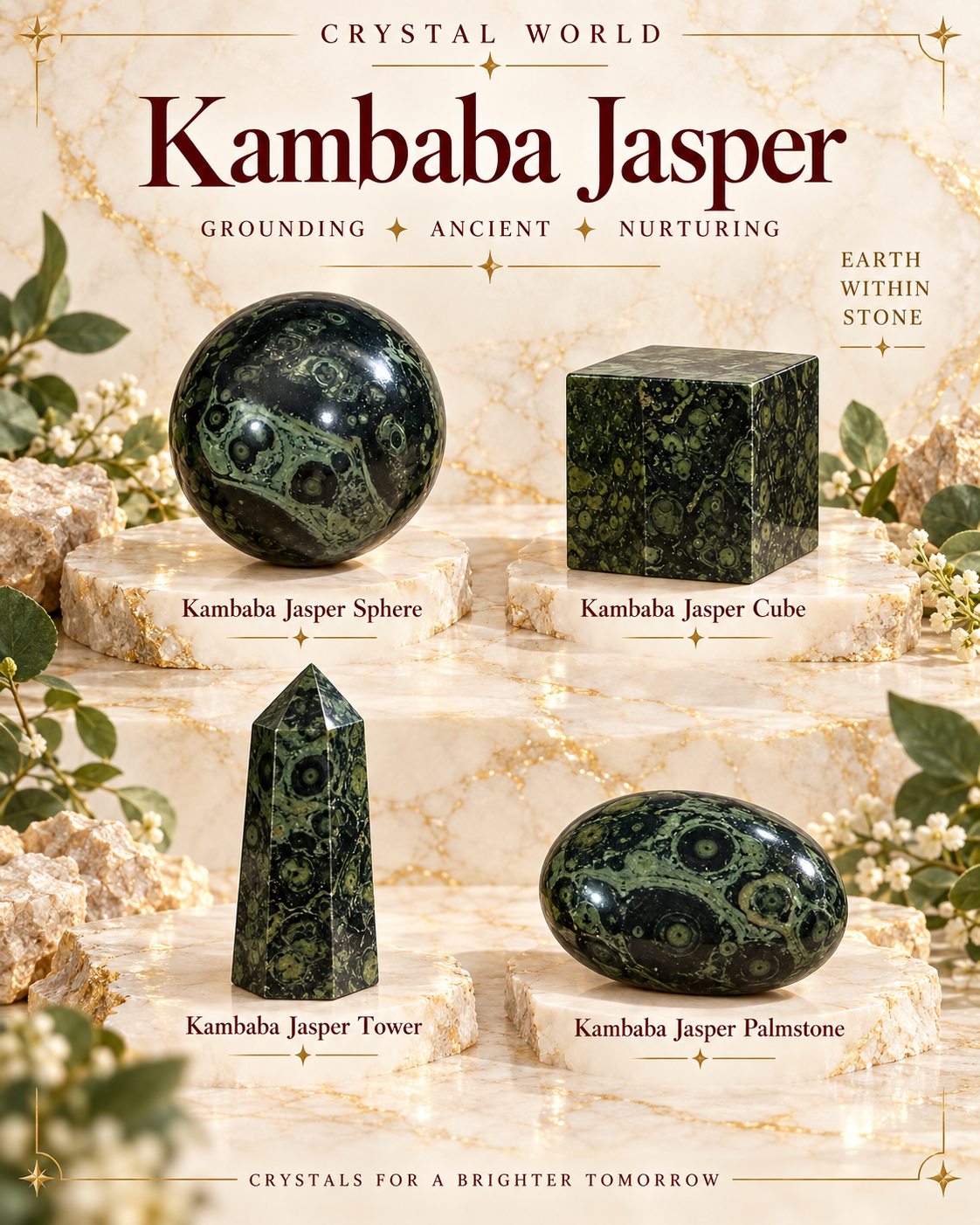
Kambaba Jasper

Pronounced: kam-BAH-buh JAS-per

Kambaba Jasper is the familiar commercial name for a distinctive dark green and black volcanic rock from Madagascar. Despite its name, it is not a true Jasper, and modern mineralogical testing indicates that its rounded patterns are volcanic mineral structures rather than fossil stromatolites.

Formula: No single formula — multi-mineral volcanic rockMohs hardness: Approximately 6–7System: Not applicable — multi-mineral rock
Kambaba JasperCW

Meet the crystal

About Kambaba Jasper

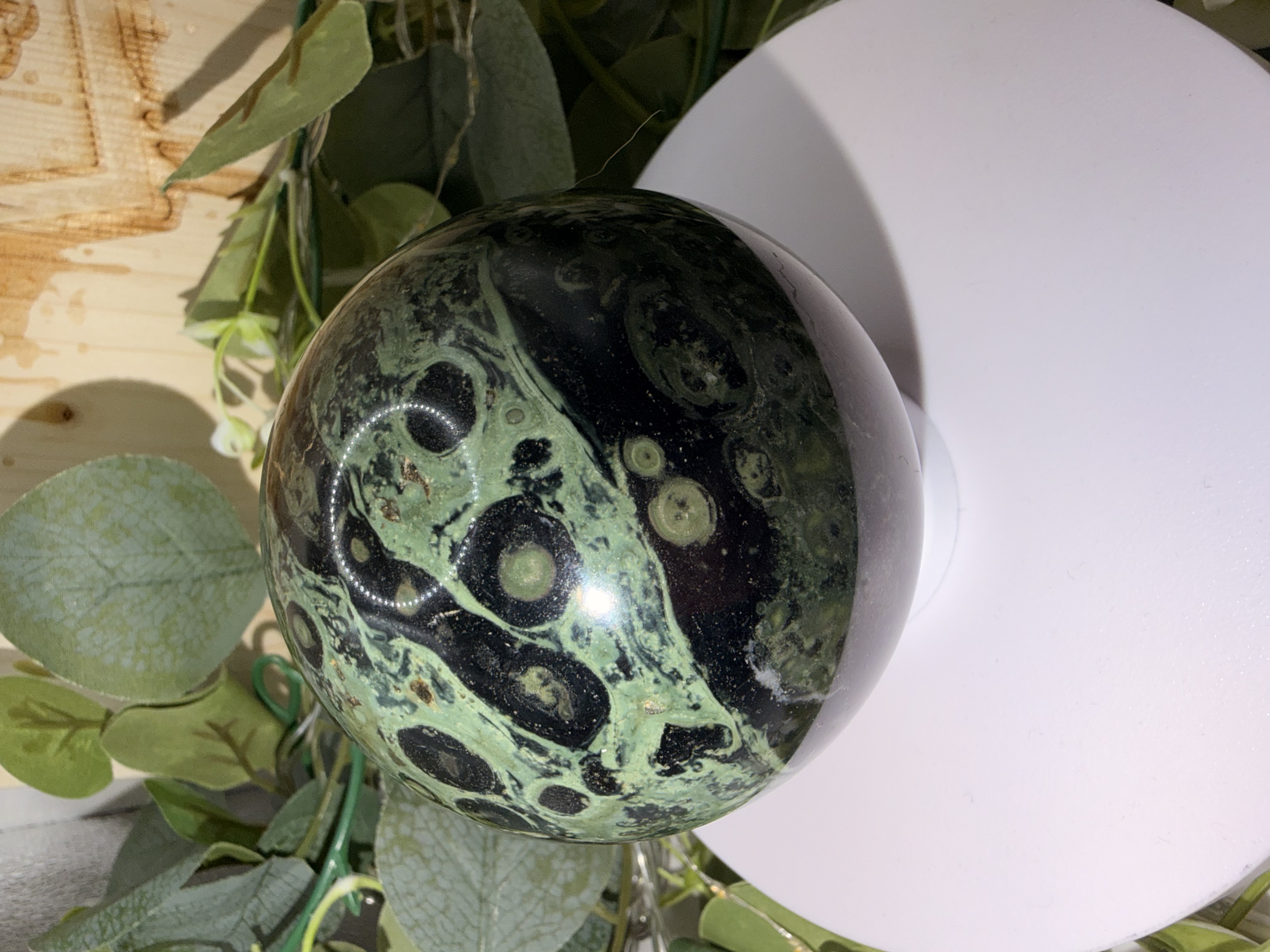
Kambaba Jasper is a striking green and black ornamental stone from Madagascar, best known for its distinctive rounded, swirling and eye-like patterns. Despite the familiar trade name, Kambaba Jasper is not technically a true Jasper. Mineralogical examination using thin-section analysis and X-ray diffraction has identified the material as a volcanic rhyolitic rock composed principally of Quartz, Aegirine pyroxene, Albite and potassium feldspar. The characteristic dark circles and swirls are made from extremely fine amphibole needles, with compositions ranging from minerals such as Riebeckite toward Pargasite. Kambaba Jasper has also been widely marketed as a fossil stromatolite formed from ancient cyanobacteria or algae. This explanation became extremely common within the crystal trade, but modern mineralogical testing does not support it. The analysed Madagascan material is igneous in origin rather than a fossil-bearing sedimentary rock. The name Kambaba Jasper therefore remains useful as a well-established commercial and searchable name, while a more geological description would be Kambaba Rhyolite or Crocodile Jasper. Its combination of deep forest green, olive and almost black orbicular patterns makes it especially popular for polished spheres, towers, palmstones, cabochons and decorative carvings.
Explore this passport

Showing Science & Formation

Scientific passport

The mineral facts

Observable and measurable properties used to describe and identify this mineral.

Chemical formula
No single formula — multi-mineral volcanic rock
Mineral class
Igneous rock — rhyolitic volcanic rock
Crystal system
Not applicable — multi-mineral rock
Mohs hardness
Approximately 6–7
Lustre
Generally dull to waxy when rough and vitreous to highly polished when finished.
Streak
Not normally used diagnostically for this multi-mineral rock.
Specific gravity
Approximately 2.6–2.9, depending on the proportions of its constituent minerals.
Transparency
Opaque

Common colours

Dark forest green, olive green, grey-green and black, usually with rounded black or very dark green orbicular patterns, swirls and eye-like markings.

Cleavage and fracture

The rock as a whole has no single cleavage direction because it consists of several intergrown minerals. Broken material typically shows an irregular to uneven fracture.

From the Earth

How it forms

The geological processes that create this crystal over time.

Formation

Its geological story

Kambaba Jasper is interpreted as a volcanic rhyolitic rock. Rhyolite forms from silica-rich magma that reaches or approaches the Earth's surface and cools relatively quickly. Within the Madagascan material, Quartz, Aegirine, Albite and potassium feldspar form the greenish groundmass. The characteristic dark rounded and swirling structures are aggregates containing extremely fine amphibole needles. These mineral aggregates developed during the crystallisation and alteration history of the volcanic rock, producing the orbicular appearance that later led people to mistake the material for fossil stromatolite. The known commercial material is quarried in western-central Madagascar, probably within the Tsiroanomandidy area of the Bongolava Region, although the exact extraction sites have historically been poorly documented.

A closer look

Scientific notes

Kambaba Jasper is one of the best examples of a commercial crystal name becoming much more widely known than the rock's geological identity. It is not technically Jasper. Jasper is generally a dense, opaque, microcrystalline silica-rich material, whereas tested Kambaba material has been identified as a rhyolitic volcanic rock composed of several distinct minerals. It is also commonly described online as a fossil stromatolite or fossilised blue-green algae. Thin-section and X-ray diffraction analysis performed by the EPI Institute in Germany identified the material as volcanic rather than sedimentary and found no evidence that the characteristic dark rings are fossil microbial structures. The green groundmass contains Quartz, Aegirine, Albite and potassium feldspar, while the darker rounded formations consist largely of extremely fine amphibole needles. For customer familiarity, Kambaba Jasper remains an appropriate commercial name provided the Passport clearly explains its true geological nature.

From the Forever SnS collection

Shop products featuring Kambaba Jasper

Each listing shows the actual product details, photographs and current availability.

Browse all crystals →

Passport complete

Who shall we meet next?

Return to Crystal World