Meet the crystal

Forever SnS Crystal Passport
Citrine
Pronounced: SIT-reen
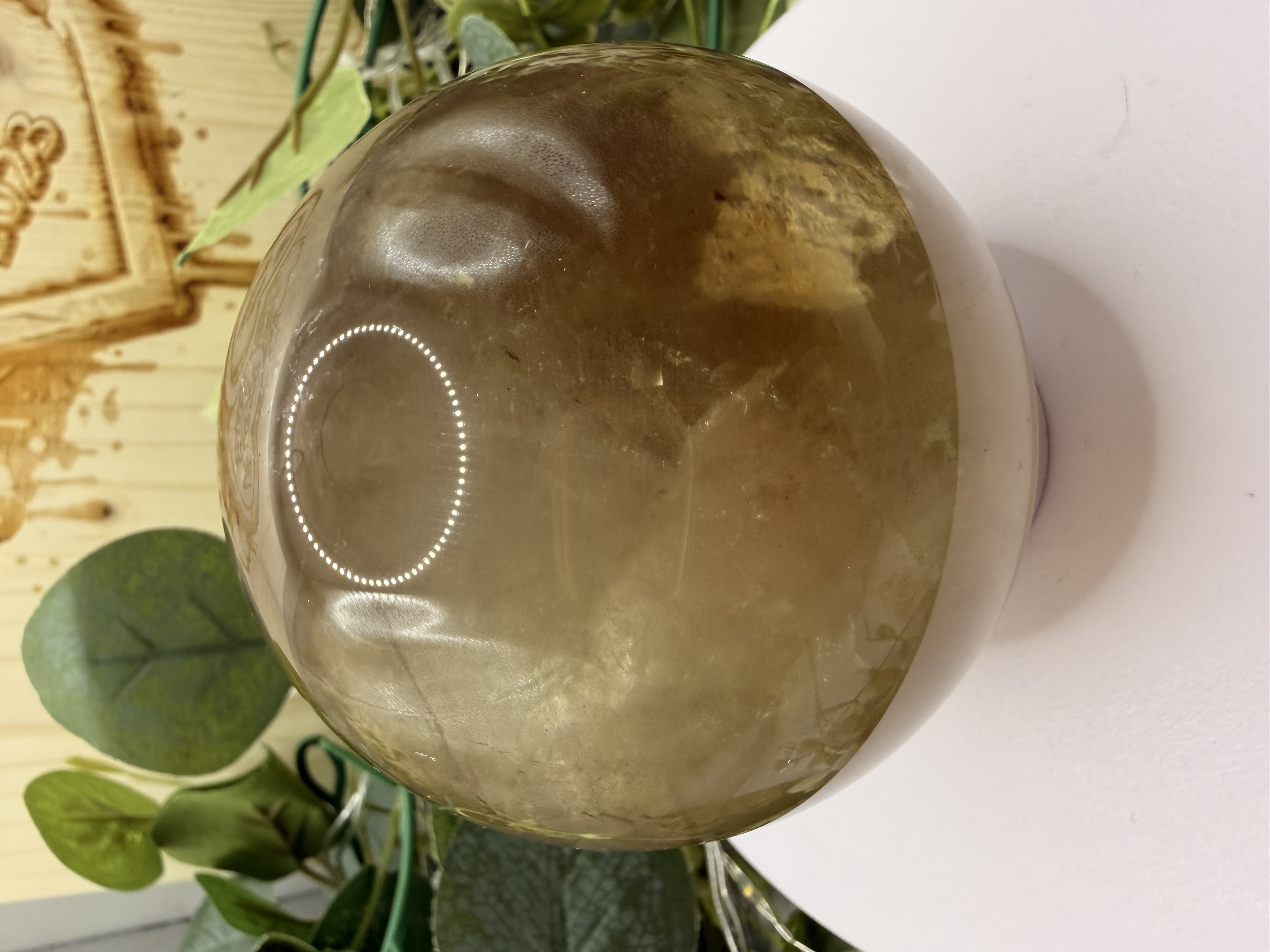
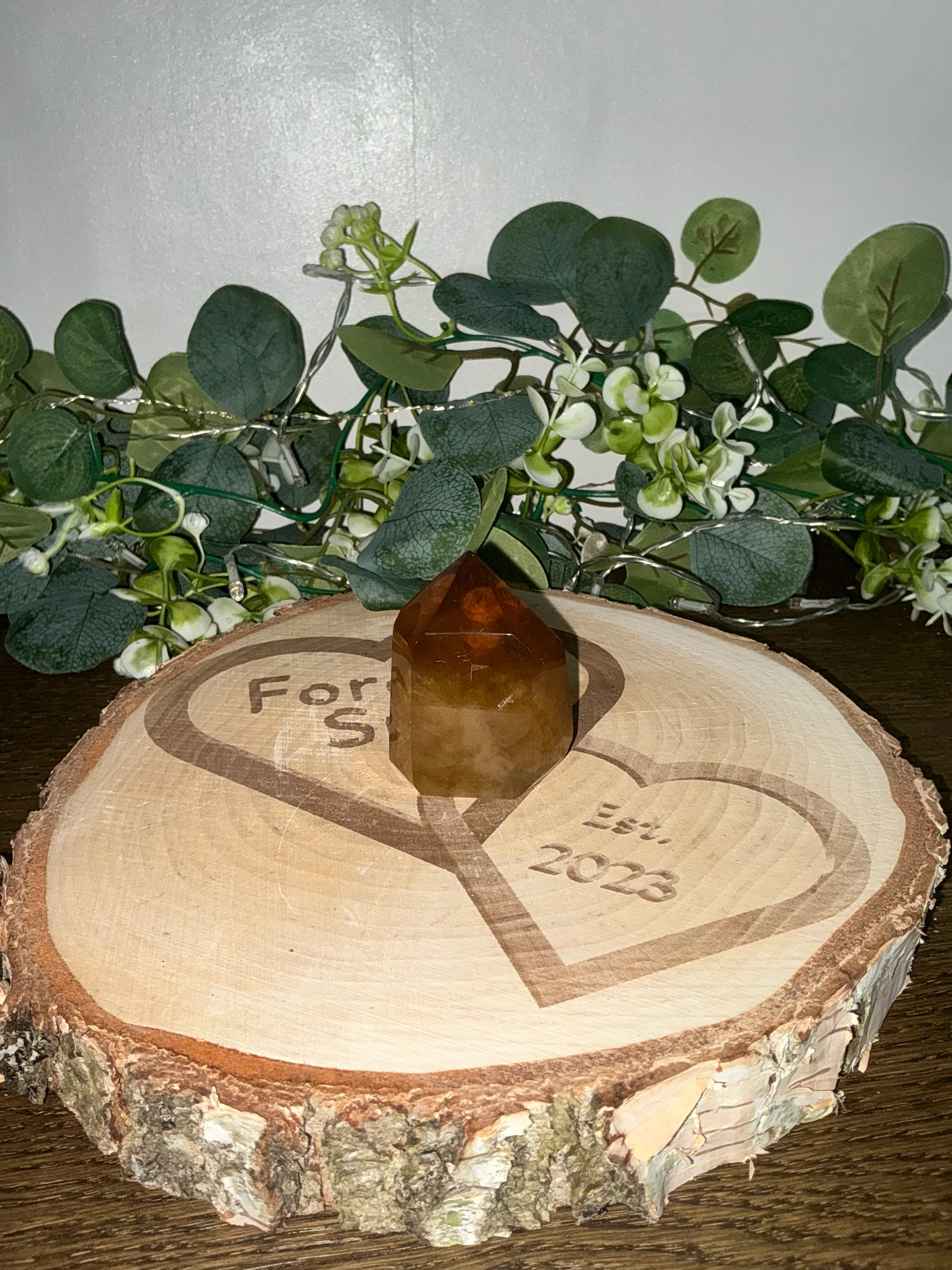
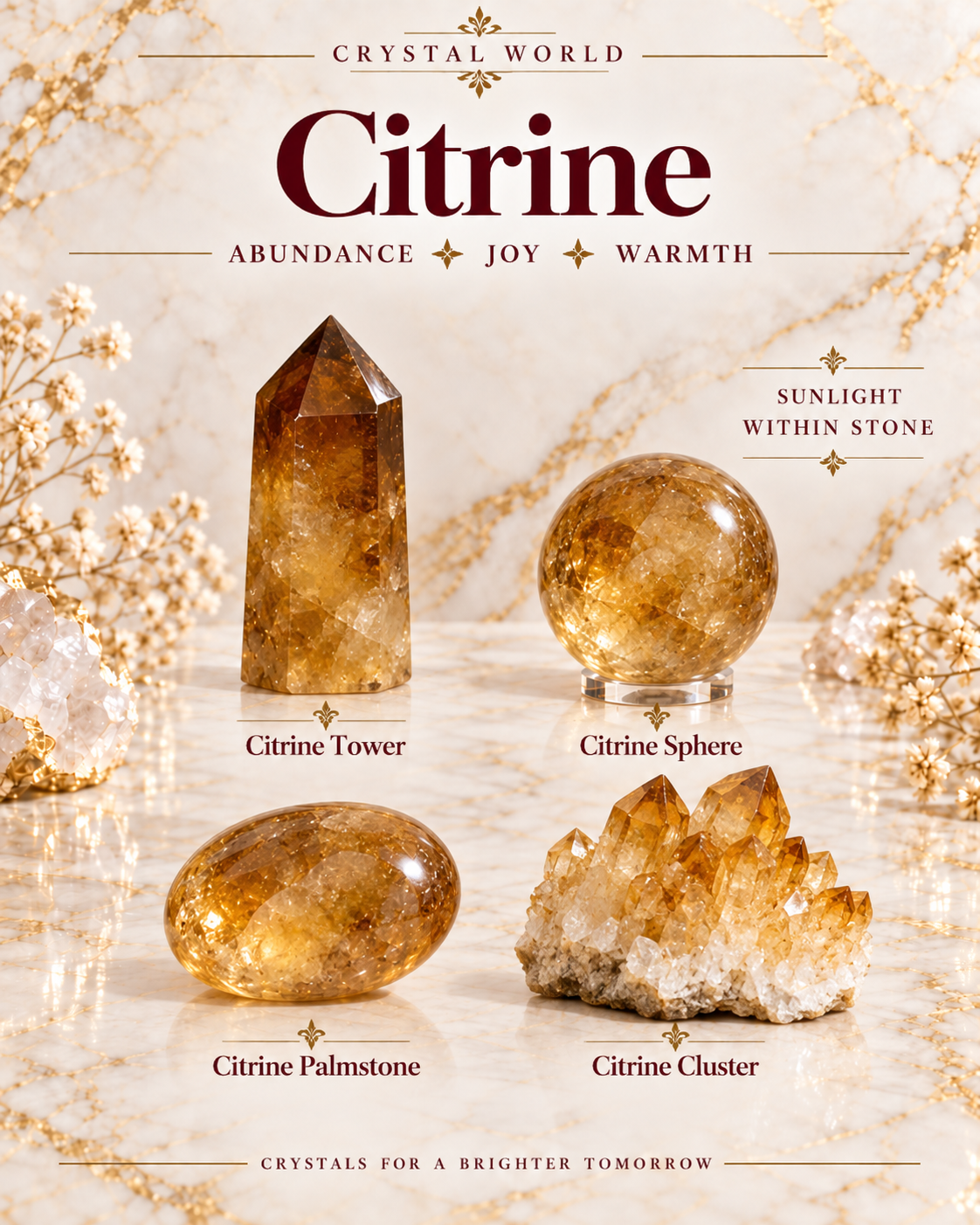
Citrine is the natural yellow to orange variety of Quartz, prized for its warm lemon, honey and golden colours. Its colour develops within the crystal itself rather than from visible iron staining or surface coatings.
CWExplore this passport
Showing Science & Formation
Scientific passport
The mineral facts
Observable and measurable properties used to describe and identify this mineral.
- Chemical formula
- SiO₂
- Mineral class
- Oxide — Quartz
- Crystal system
- Trigonal
- Mohs hardness
- 7
- Lustre
- Vitreous
- Streak
- White
- Specific gravity
- Approximately 2.65
- Transparency
- Transparent to translucent
Common colours
Pale yellow, lemon yellow, golden yellow, yellow-orange, orange and occasionally brownish-yellow
Cleavage and fracture
Poor to indistinct cleavage; typically conchoidal fracture
From the Earth
How it forms
The geological processes that create this crystal over time.
Formation
Its geological story
Natural Citrine forms as Quartz crystallises from silica-rich fluids in geological environments such as hydrothermal veins and pegmatites. Its yellow colour develops through defects within the Quartz crystal lattice associated with trace elements and natural irradiation. Mindat notes that at least some natural Citrine is coloured by aluminium-related, irradiation-induced colour centres similar to those involved in Smoky Quartz. The exact cause of Citrine colour is still an area of scientific discussion and may vary between deposits. Natural heating within geological environments can also affect Quartz colour over long periods. Artificial heating can reproduce yellow-orange colours in certain Amethyst, which explains the enormous amount of heat-treated material in the modern gem market.
A closer look
Scientific notes
Citrine is a variety of Quartz, not a separate mineral species. Mindat defines Citrine as yellow to yellow-orange or yellow-green Quartz and specifically warns that Quartz coloured by visible inclusions or coatings is not Citrine. This distinction is especially important for your Crystal Passport: Natural Citrine Colour originates within the Quartz crystal. Golden Healer / iron-stained Quartz Yellow or golden appearance comes from visible iron oxides or hydroxides. Heat-treated Amethyst Genuine Quartz whose original purple Amethyst colour has been intentionally altered by heating. Lemon Quartz A commercial term that can refer to yellow Quartz and may include artificially irradiated material, so treatment disclosure matters. Natural Citrine can also gradually fade under prolonged ultraviolet exposure, and heating can alter or remove its colour centres.
Passport stamps
Where in the world?
Important countries, regions and mineral localities connected with this crystal.
Bolivia
Anahí Mine, Germán Busch Province
Santa Cruz Department
The Anahí Mine is one of the most important documented sources of natural Citrine. It is especially famous because natural Amethyst and Citrine can occur in the same crystal there, creating Ametrine. GIA field and laboratory work concluded that the colour combination in Anahí Ametrine is natural rather than the result of laboratory treatment.
Zambia
Kitwe area
Copperbelt Province
The Kitwe area has produced large, clean yellow Citrine reported as natural-colour and untreated. GIA examined stones represented as coming from this deposit and documented pale yellow through stronger golden-brown colours together with distinctive internal haze and bands
Madagascar
Sahatany Pegmatite Field / Mt Ibity area
Vakinankaratra
The Sahatany pegmatite field in central Madagascar is a documented Citrine locality. Mindat records Citrine from the Sahatany Valley and associated pegmatites near Ibity and Antsirabe, making Madagascar an important source region for naturally yellow Quartz.
Brazil
Diamantina / São João da Chapada
Minas Gerais
Diamantina and nearby São João da Chapada are established Citrine localities in Minas Gerais. Brazil is also a major source of Amethyst that is commercially heat-treated into yellow-orange Quartz, so provenance and treatment disclosure are particularly important when Brazilian material is sold as Citrine.
Brazil
Corinto
Minas Gerais
Corinto is another confirmed Citrine-producing municipality in Minas Gerais, with documented natural Citrine specimens. It helps show that Brazil produces genuine Citrine as well as the much larger commercial supply of heated Amethyst commonly sold under the Citrine name.
Crystal Detective
Look closely. Ask better questions.
Safe observations at home are separated from professional laboratory identification. No single home test can prove every specimen's identity or origin.
Safe checks at home
Begin with colour and growth habit, but do not use either alone as proof. Natural Citrine is commonly pale to moderately coloured rather than intensely burnt orange. Many untreated crystals show relatively subtle yellow, champagne, golden or smoky-yellow tones. Rotate the specimen under strong light and look at how the colour passes through the crystal. Natural colour may show gradual zoning or variation rather than a sharply concentrated burnt-orange colour at crystal tips. Be particularly cautious with Amethyst geodes or clusters showing: - white Quartz bases, - very dark orange or brown crystal tips, - strong colour concentrated toward terminations, - or the familiar “burnt” appearance of heated Amethyst. Those features are commonly associated with heat-treated Amethyst rather than natural Citrine. However, appearance alone cannot always prove treatment.
Professional methods
Standard gemological testing confirms Quartz using refractive index, specific gravity, optical properties and spectroscopy. Natural Citrine and heat-treated Amethyst can be difficult to distinguish because both remain Quartz and therefore share many standard physical properties. Advanced spectroscopy, microscopy and analysis of colour zoning may assist in determining whether colour formation is consistent with natural or heat-induced processes. Raman spectroscopy and X-ray diffraction can confirm Quartz but normally do not by themselves establish whether yellow colour developed naturally or through commercial heating. The treatment history may therefore remain uncertain when provenance and laboratory documentation are absent.
Imitations and treatments
The most significant issue in the Citrine market is heat-treated Amethyst. Heating suitable Amethyst can change purple Quartz into yellow, orange or brown Quartz. This treatment has been used commercially for many years and does not make the material fake Quartz. The problem occurs when heated material is sold as natural untreated Citrine without disclosure. Other potentially confusing materials include: - Yellow glass - Dyed Quartz - Irradiated yellow Quartz - Lemon Quartz - Golden Healer Quartz - Iron-stained Clear Quartz - Yellow Fluorite - Synthetic Quartz Visible iron staining or coatings are particularly important to recognise because Mindat specifically states that iron-stained Quartz should not be mistaken for Citrine.
The Mythical Library
Stories carried through time
Folklore can be enjoyed without confusing it with evidence. Where a popular tale is a later retelling, the passport says so.
The Mythical Library
Choose a book to enter the full-screen reader.
Beliefs, traditions and cultural context
What people have believed
Yellow Quartz has been known and used historically, although the modern crystal-spiritual meanings attached specifically to Citrine are largely contemporary. The name Citrine ultimately relates to words describing a citron or yellow colour. In modern crystal spirituality, Citrine is commonly associated with optimism, confidence, creativity, abundance, motivation and personal energy. It is often linked with the Solar Plexus chakra and sometimes the Sacral chakra. One particularly common modern nickname is “the Merchant's Stone”, reflecting contemporary beliefs associating Citrine with prosperity and commercial success. These associations belong to modern crystal spirituality rather than mineral science. Citrine does not scientifically attract money, alter mood, improve physical health or influence financial outcomes. Its documented geological properties are those of yellow Quartz; symbolic meanings should remain clearly separated from scientific claims.
Handle thoughtfully
Safety notes
Finished Citrine is generally safe for normal handling. As with all Quartz, cutting, drilling, grinding or crushing can generate respirable crystalline silica dust. Use wet-working methods, dust extraction, eye protection and suitable respiratory protection during lapidary work. Do not inhale Quartz dust or intentionally ingest powdered material. Avoid making drinking-water preparations using loose or unknown mineral specimens.
Keep it beautiful
Care and cleaning
Citrine is relatively durable with a Mohs hardness of 7. Clean with lukewarm water, mild soap and a soft cloth or brush. Avoid prolonged exposure to strong sunlight or ultraviolet light because Citrine colour may fade over time. Mindat notes UV-related fading in natural material. Mindat Avoid sudden temperature extremes because heat can alter Quartz colour centres. Ultrasonic cleaning is usually tolerated by clean, unfractured Quartz, but should be avoided for heavily fractured specimens or pieces with unknown treatment histories. Steam cleaning is best avoided where treatment history is uncertain.
From the Forever SnS collection
Shop products featuring Citrine
Each listing shows the actual product details, photographs and current availability.
Passport complete