You were here at the beginning

Some beginnings deserve
something extraordinary.

Thank you for joining Forever SnS before our launch. This exclusive collection is our gift to you — yours to keep, forever.

Rosefire Phoenix

Rosefire Phoenix

Rose, amethyst & a little magic

Midnight Phoenix

Midnight Phoenix

Sapphire light & midnight wings

2 companions · 2 banners · 2 backgrounds
2 borders · 2 Sparks · 2 chat colours

Made for our early birds. Never available to accounts created after launch.

A small family-run business creating beautiful, meaningful gifts

Jewellery • Crystals • STL Downloads

Forever SnS Crystal Passport

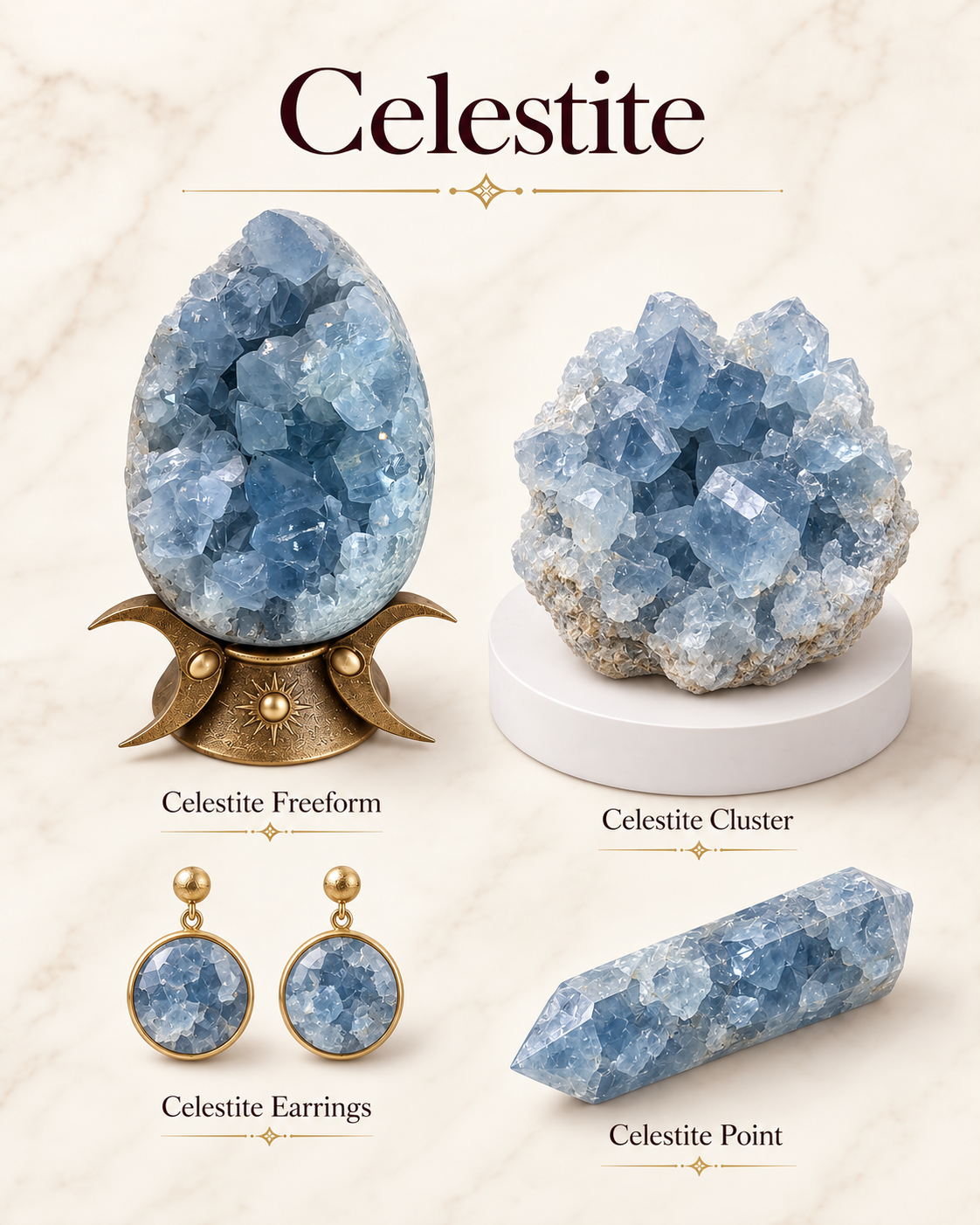
Celestite

Pronounced: SELL-uh-styte

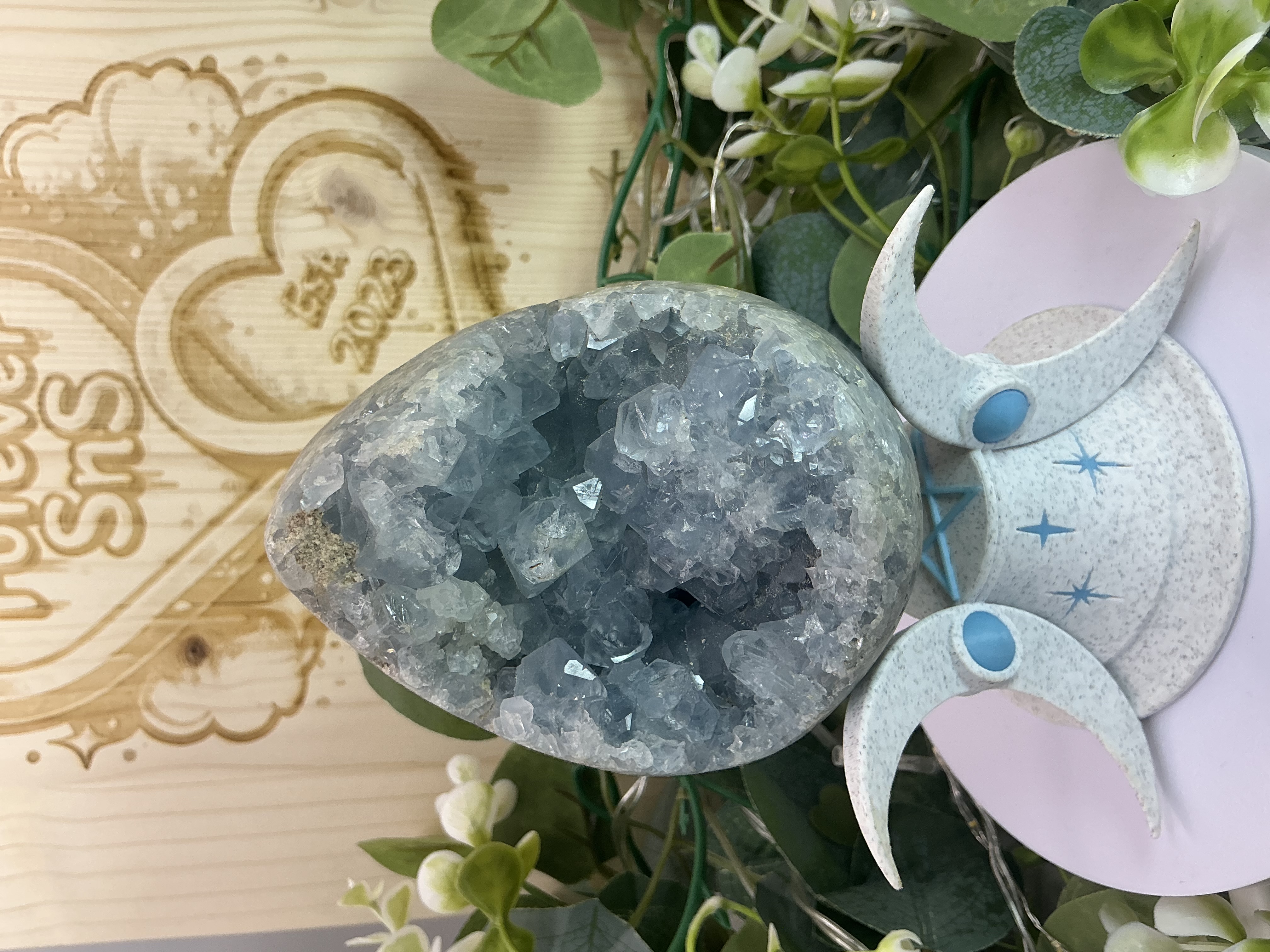
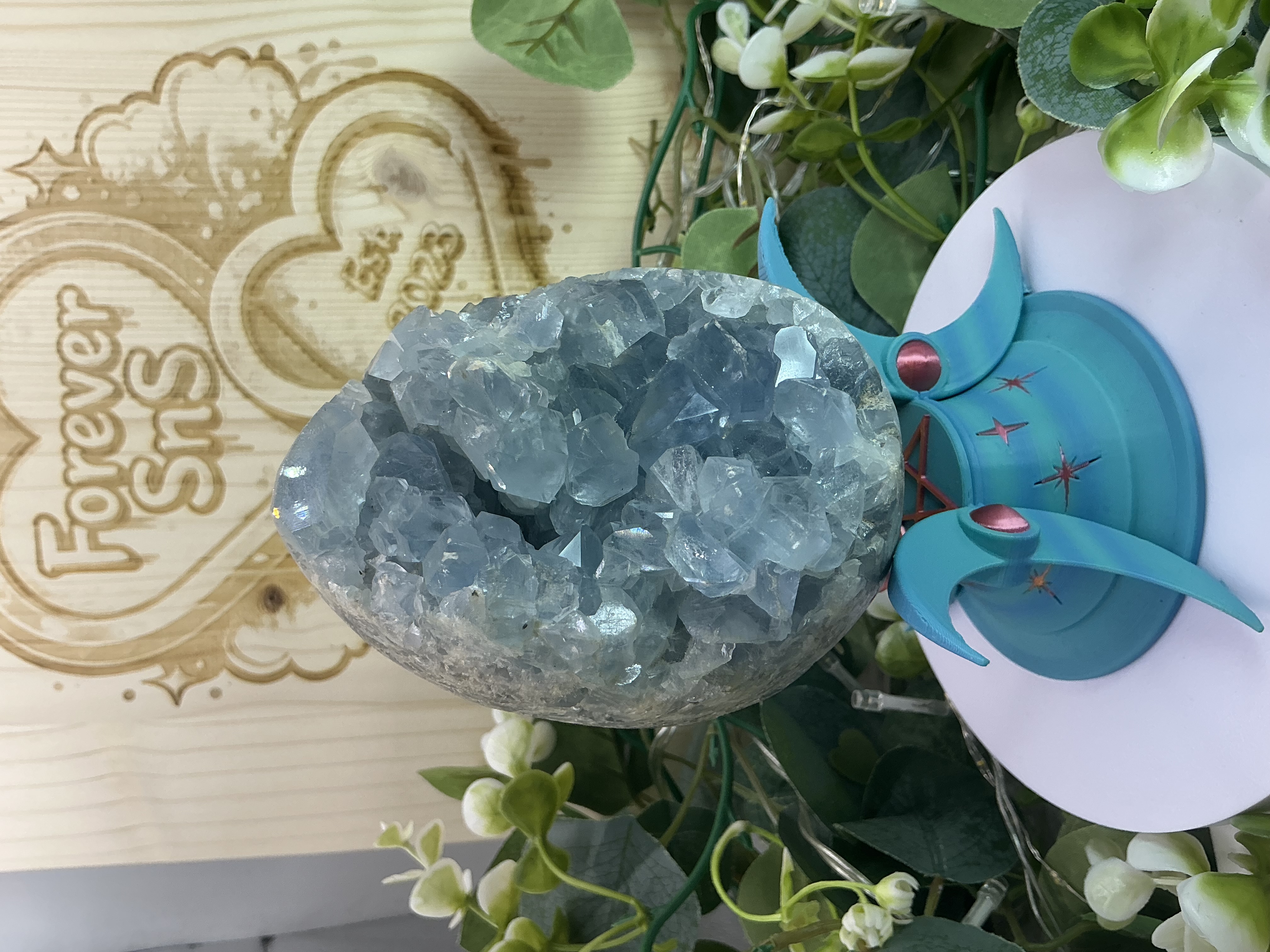
Celestite is a beautiful, delicate mineral best known for its soft sky-blue crystals and striking crystal clusters. Its heavenly colouring and elegant formations make it a popular choice with collectors and crystal enthusiasts.

Formula: SrSO₄Mohs hardness: 3–3.5System: Orthorhombic
CelestiteCW

Meet the crystal

About Celestite

Celestite, also known as Celestine, is a striking strontium sulfate mineral most recognised for its delicate sky-blue colouring and beautifully formed crystals. It commonly occurs as crystal clusters, geodes and tabular or prismatic crystals, ranging from transparent to translucent. Its name comes from the Latin word meaning “celestial” or “heavenly”, inspired by its characteristic pale-blue appearance. Particularly beautiful specimens are found in Madagascar, which is well known for producing impressive Celestite geodes and clusters. With its distinctive colouring, attractive crystal formations and relatively delicate nature, Celestite is highly valued by mineral collectors and crystal enthusiasts alike.
Explore this passport

Showing Science & Formation

Scientific passport

The mineral facts

Observable and measurable properties used to describe and identify this mineral.

Chemical formula
SrSO₄
Mineral class
Sulfate
Crystal system
Orthorhombic
Mohs hardness
3–3.5
Lustre
Vitreous to pearly
Streak
White
Specific gravity
3.96–3.98
Transparency
Transparent to translucent

Common colours

Pale blue, colourless, white, grey, greenish, reddish, brownish

Cleavage and fracture

Perfect cleavage in one direction, good cleavage in another; uneven to irregular fracture

From the Earth

How it forms

The geological processes that create this crystal over time.

Formation

Its geological story

Celestite most commonly forms in sedimentary environments, especially in limestone, dolostone and evaporite deposits. Strontium-rich groundwater or mineral-bearing fluids react with sulfate-rich waters, allowing Celestite crystals to grow within cavities, veins, geodes and nodules. It may also occur as a secondary mineral where existing rocks have been altered by mineral-rich fluids.

A closer look

Scientific notes

Celestite is a strontium sulfate mineral with the chemical formula SrSO₄ and belongs to the baryte mineral group. Its characteristic pale-blue colour can vary considerably, with specimens also occurring colourless, white, grey, greenish, reddish or brownish. Celestite has a relatively high specific gravity for a light-coloured mineral because of its strontium content. It is comparatively soft and brittle, with strong cleavage, meaning well-formed crystals can be easily damaged. Celestite is also an important natural source of strontium, which has a range of industrial uses.

From the Forever SnS collection

Shop products featuring Celestite

Each listing shows the actual product details, photographs and current availability.

Browse all crystals →

Passport complete

Who shall we meet next?

Return to Crystal World