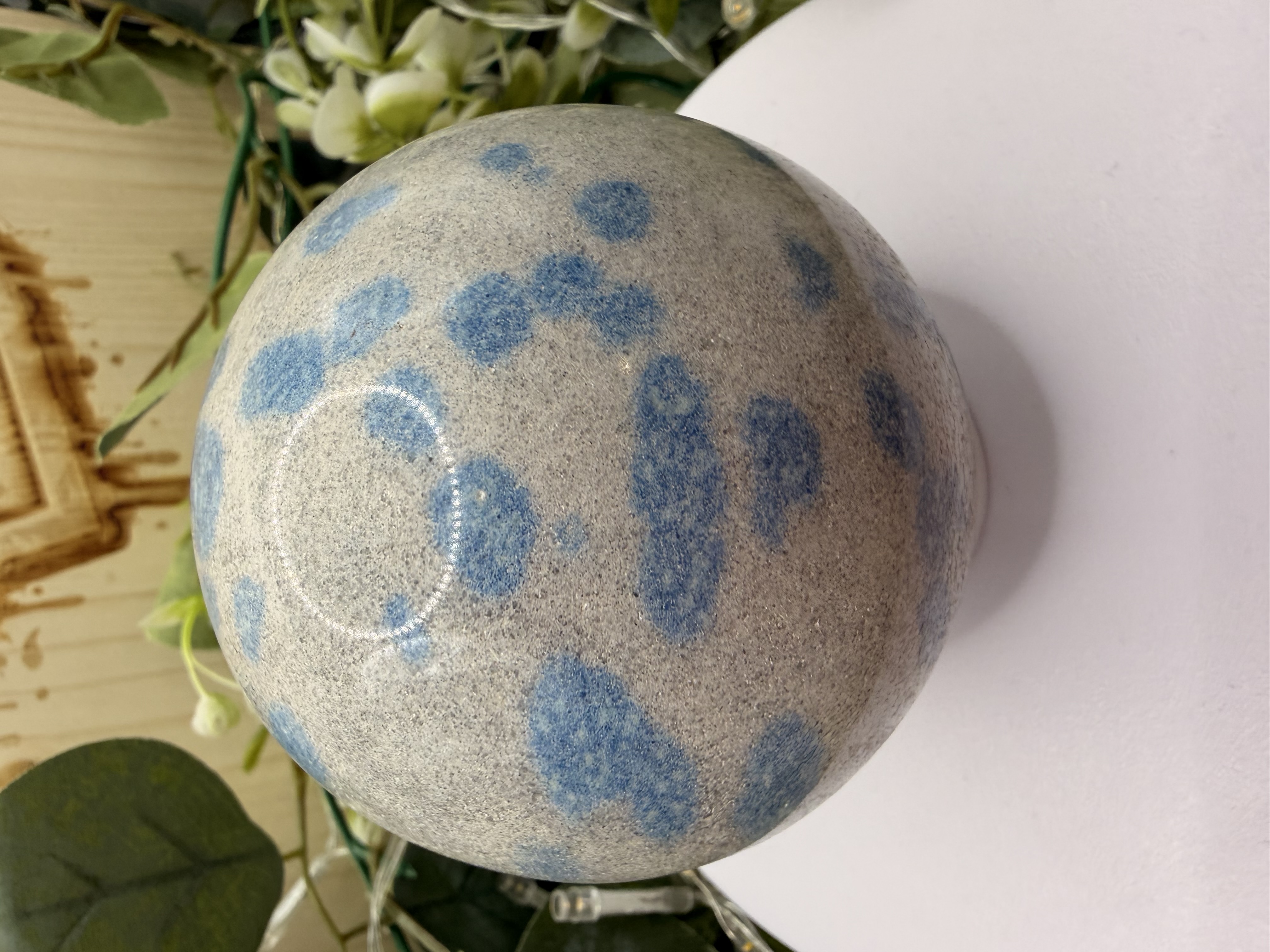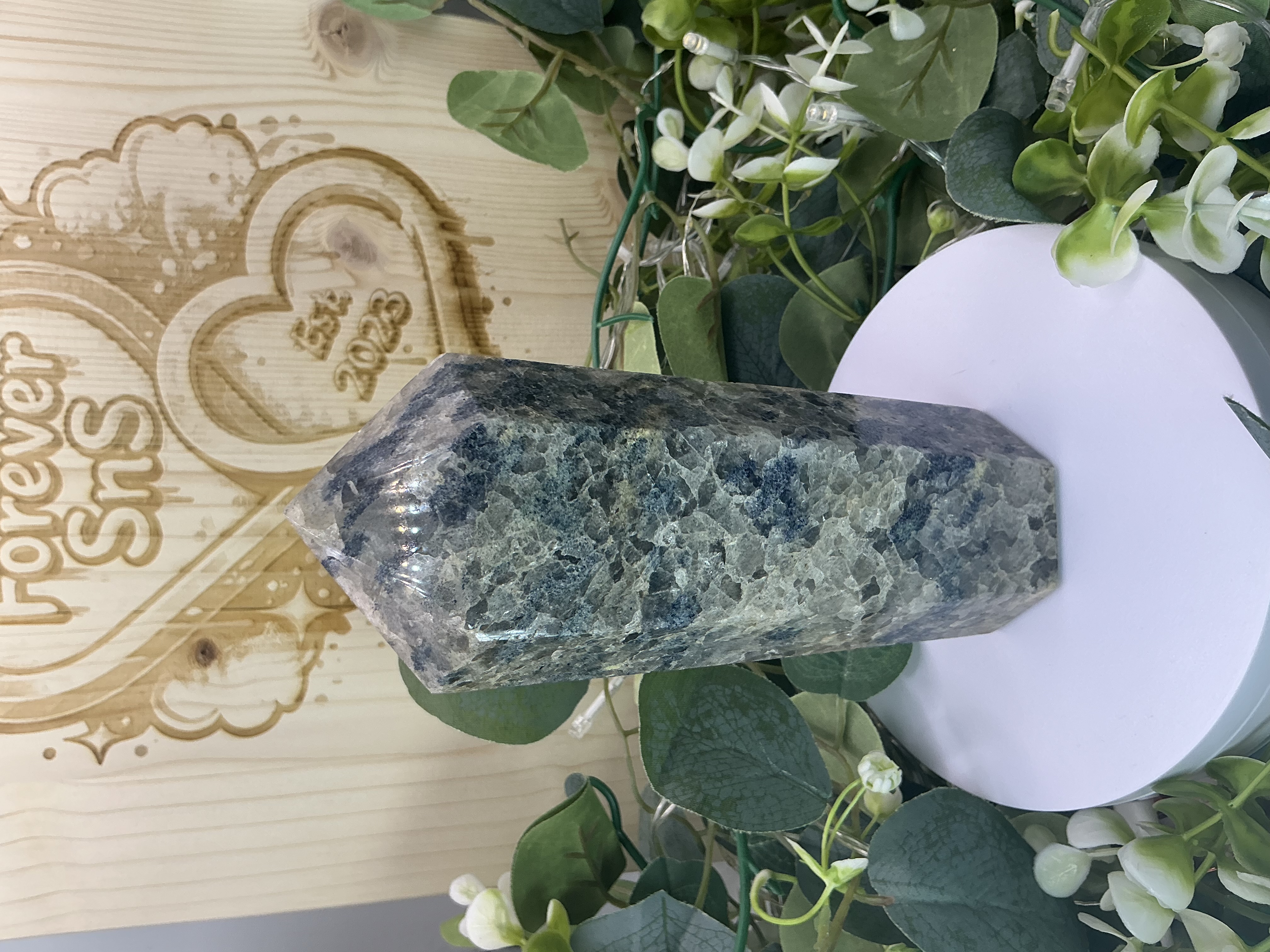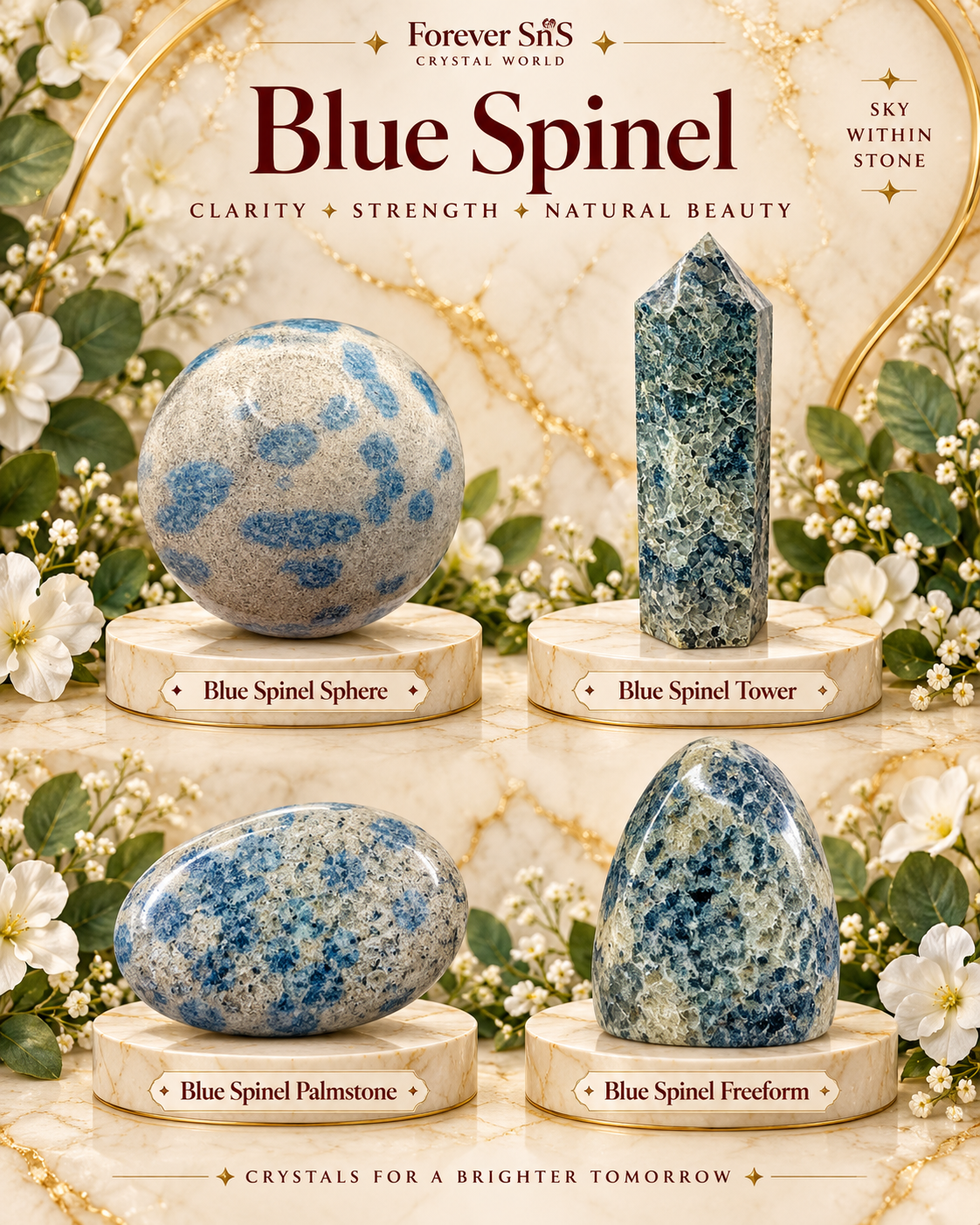
Meet the crystal

Forever SnS Crystal Passport
Blue Spinel
Pronounced: BLOO SPIN-el
Blue Spinel is a naturally occurring blue variety of Spinel, a magnesium aluminium oxide mineral prized for its rich colour, durability and brilliance.
CWExplore this passport
Showing Science & Formation
Scientific passport
The mineral facts
Observable and measurable properties used to describe and identify this mineral.
- Chemical formula
- MgAl₂O₄
- Mineral class
- Oxide — Spinel Group
- Crystal system
- Cubic
- Mohs hardness
- 7.5–8
- Lustre
- Vitreous
- Streak
- White
- Specific gravity
- Approximately 3.5–3.6
- Transparency
- Transparent to opaque
Common colours
Blue, cobalt blue, violet-blue, grey-blue and greenish-blue
Cleavage and fracture
No true cleavage; conchoidal to uneven fracture.
From the Earth
How it forms
The geological processes that create this crystal over time.
Formation
Its geological story
Blue Spinel commonly forms during high-temperature metamorphism, particularly in magnesium- and aluminium-rich rocks such as marble. It may also occur in some igneous environments. Once exposed by erosion, Spinel crystals can survive weathering and become concentrated in river and gravel deposits because of their relatively high hardness and durability.
A closer look
Scientific notes
Blue Spinel is a colour variety of the mineral Spinel. Its blue colour may be produced by trace cobalt, iron or combinations of transition elements within the crystal structure. Cobalt-rich specimens can produce particularly vivid blue colours and are sometimes referred to commercially as Cobalt Spinel. Spinel is singly refractive because it belongs to the cubic crystal system. Natural Spinel has historically been confused with Sapphire and other gemstones because of similarities in colour and appearance.
Passport stamps
Where in the world?
Important countries, regions and mineral localities connected with this crystal.
Vietnam
Lục Yên District
Yên Bái Province
Lục Yên is one of the world’s most important sources of vivid Blue Spinel and is especially famous for intensely saturated cobalt-rich blue material. Blue Spinel occurs both in marble and in secondary alluvial deposits throughout the district.
Vietnam
Khe Khi, Lục Yên District
Yên Bái Province
Khe Khi is a documented source of fine electric-blue Spinel within the Lục Yên gem district. The material is particularly valued for its bright blue colour, although fine crystals can be small or included.
Vietnam
Bai Son, Lục Yên District
Yên Bái Province
Bai Son is a documented Blue Spinel occurrence where crystals are found within white marble. The locality helps demonstrate the metamorphic environment in which many Blue Spinels form.
Sri Lanka
Ratnapura gem fields
Sabaragamuwa Province
Ratnapura is one of Sri Lanka’s major gem-producing regions and has produced natural cobalt-blue Spinel. Its alluvial deposits contain a wide variety of gemstones weathered from older metamorphic rocks.
Worldwide
Myanmar, Tanzania and Pakistan
Other recognised gem-producing regions
Blue Spinel is not confined to Vietnam or Sri Lanka. Gem-quality blue material is also documented from Myanmar, Tanzania and Pakistan, although colour, clarity and trace-element chemistry vary between deposits.
Crystal Detective
Look closely. Ask better questions.
Safe observations at home are separated from professional laboratory identification. No single home test can prove every specimen's identity or origin.
Safe checks at home
Blue Spinel is relatively hard and usually has a bright glassy lustre. Well-polished specimens may show strong brilliance. It has no true cleavage, which helps make it more durable than many gemstones. Colour alone cannot reliably distinguish natural Spinel from synthetic Spinel or Sapphire. Avoid scratch testing valuable specimens.
Professional methods
Refractive index testing can help identify Spinel. Gemological microscopes may reveal inclusions and growth features that help distinguish natural from synthetic material. Spectroscopy can identify cobalt, iron and other colouring elements. UV fluorescence may provide additional clues in some specimens. Advanced laboratories may use Raman spectroscopy, chemical analysis and trace-element testing to confirm identity and origin.
Imitations and treatments
Blue Spinel may be confused with Sapphire, Tanzanite, blue glass and synthetic Spinel. Synthetic Spinel is common and can be produced in strong blue colours. Natural Blue Spinel is generally not known for extensive routine colour treatment, making disclosure of synthetic origin especially important. Laboratory testing may be needed to distinguish natural from synthetic specimens.
The Mythical Library
Stories carried through time
Folklore can be enjoyed without confusing it with evidence. Where a popular tale is a later retelling, the passport says so.
The Mythical Library
Choose a book to enter the full-screen reader.
Beliefs, traditions and cultural context
What people have believed
Blue Spinel does not have a clearly documented ancient spiritual tradition under the modern name Blue Spinel. In contemporary crystal spirituality, blue varieties of Spinel are commonly associated with calm communication, confidence, mental clarity and emotional balance. Some modern practitioners connect Blue Spinel with the Throat chakra because of its colour and symbolic associations with communication and self-expression. These beliefs belong to modern crystal spirituality and are not scientifically demonstrated medical, psychological or physical effects. Historically, Spinel itself was often mistaken for other gemstones, especially Ruby and Sapphire, because reliable gem identification techniques did not yet exist.
Handle thoughtfully
Safety notes
Finished Blue Spinel is generally safe for normal handling. Cutting, grinding or drilling can create fine mineral dust that should not be inhaled. Use wet-working methods, eye protection and suitable respiratory protection during lapidary work. Do not ingest powdered mineral material.
Keep it beautiful
Care and cleaning
Clean Blue Spinel using lukewarm water, mild soap and a soft brush or cloth. It is durable enough for normal jewellery wear. Avoid sudden extreme temperature changes and harsh chemicals. Store separately from harder gemstones such as Diamond to prevent scratching. Ultrasonic cleaning may be suitable for clean, untreated stones without fractures, but gentle hand cleaning is safest.
Follow the evidence
Sources and further reading
We show the references used while researching this passport so visitors can check important claims and continue learning.
- 1
Overview
Spinel Gemstone
Gemological Institute of America · Gemological Institute of America
Primary gemological reference for Spinel, including its chemistry, cubic crystal system, hardness, specific gravity, colours and historical identification.
Checked 4 Oct 2026
- 2
Localities
Blue Spinel from the Luc Yen District of Vietnam
Boris Chauviré, Benjamin Rondeau, Emmanuel Fritsch, Phillipe Ressigeac and Jean-Luc Devidal · Gems & Gemology / Gemological Institute of America · 2015
Major scientific study of Blue Spinel from Lục Yên, Vietnam. Covers its geology, gemological properties and the role of cobalt and iron in producing blue colour.
Checked 4 Oct 2026
- 3
Localities
Update on Gemstone Mining in Luc Yen, Vietnam
Vincent Pardieu and GIA field gemology contributors · Gems & Gemology / Gemological Institute of America · 2013
Documents specific Blue Spinel localities within Lục Yên, including Bai Son, Khe Khi, Ba Linh Mot and other primary and alluvial deposits.
Checked 4 Oct 2026
- 4
Laboratory identification
Blue Spinel Chromophores
GIA research contributors · Gems & Gemology / Gemological Institute of America · 2018
Spectroscopic and chemical research on Blue Spinel from Vietnam, Sri Lanka, Madagascar and Tanzania showing how cobalt and different iron states contribute to blue, violet and grey-blue colour.
Checked 4 Oct 2026
- 5
Fakes and treatments
Spinel Buyer’s Guide
Gemological Institute of America · Gemological Institute of America
Used for information about natural and laboratory-grown Spinel, treatment disclosure, durability and the rarity and value of vivid cobalt-blue material.
Checked 4 Oct 2026
- 6
Myths and folklore
Forever SnS Mythical Library — Original Blue Spinel Folklore
Forever SnS · Forever SnS Ltd · 2026
The Blue Flame Beneath the Mountain and The Stone That Refused to Be Sapphire are original contemporary Forever SnS stories inspired by Blue Spinel’s cobalt-related colour, geological formation and history of gemstone misidentification. They are not presented as ancient or traditional folklore.
Checked 4 Oct 2026
- 7
Beliefs and traditions
Spinel History and Lore
Gemological Institute of America · Gemological Institute of America
Used for documented historical context showing that Spinel was frequently mistaken for Ruby and Sapphire and that important royal gemstones were later identified as Spinel.
Checked 4 Oct 2026
From the Forever SnS collection
Shop products featuring Blue Spinel
Each listing shows the actual product details, photographs and current availability.
Passport complete