You were here at the beginning

Some beginnings deserve
something extraordinary.

Thank you for joining Forever SnS before our launch. This exclusive collection is our gift to you — yours to keep, forever.

Rosefire Phoenix

Rosefire Phoenix

Rose, amethyst & a little magic

Midnight Phoenix

Midnight Phoenix

Sapphire light & midnight wings

2 companions · 2 banners · 2 backgrounds
2 borders · 2 Sparks · 2 chat colours

Made for our early birds. Never available to accounts created after launch.

A small family-run business creating beautiful, meaningful gifts

Jewellery • Crystals • STL Downloads

Forever SnS Crystal Passport

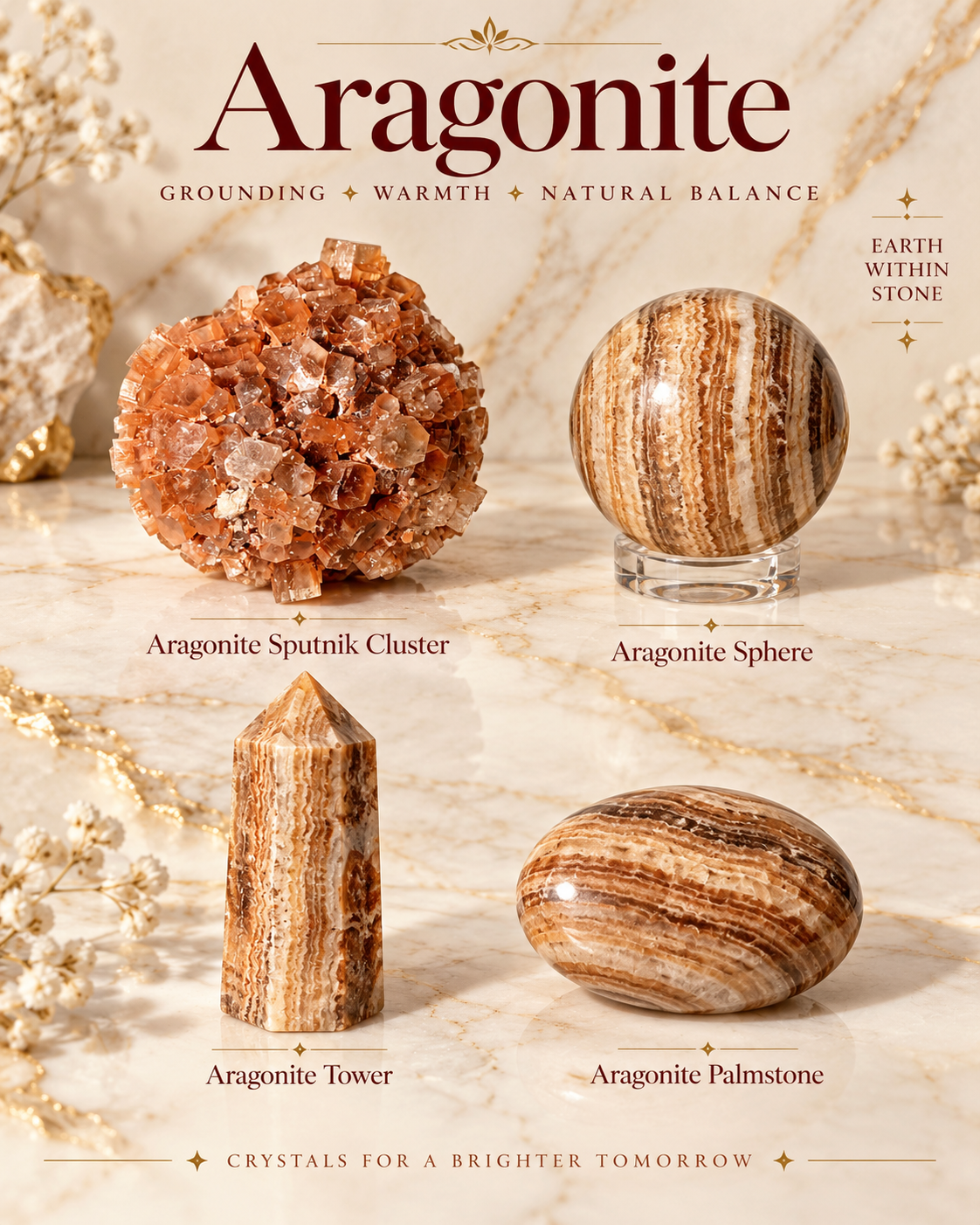
Aragonite

Pronounced: uh-RAG-uh-night

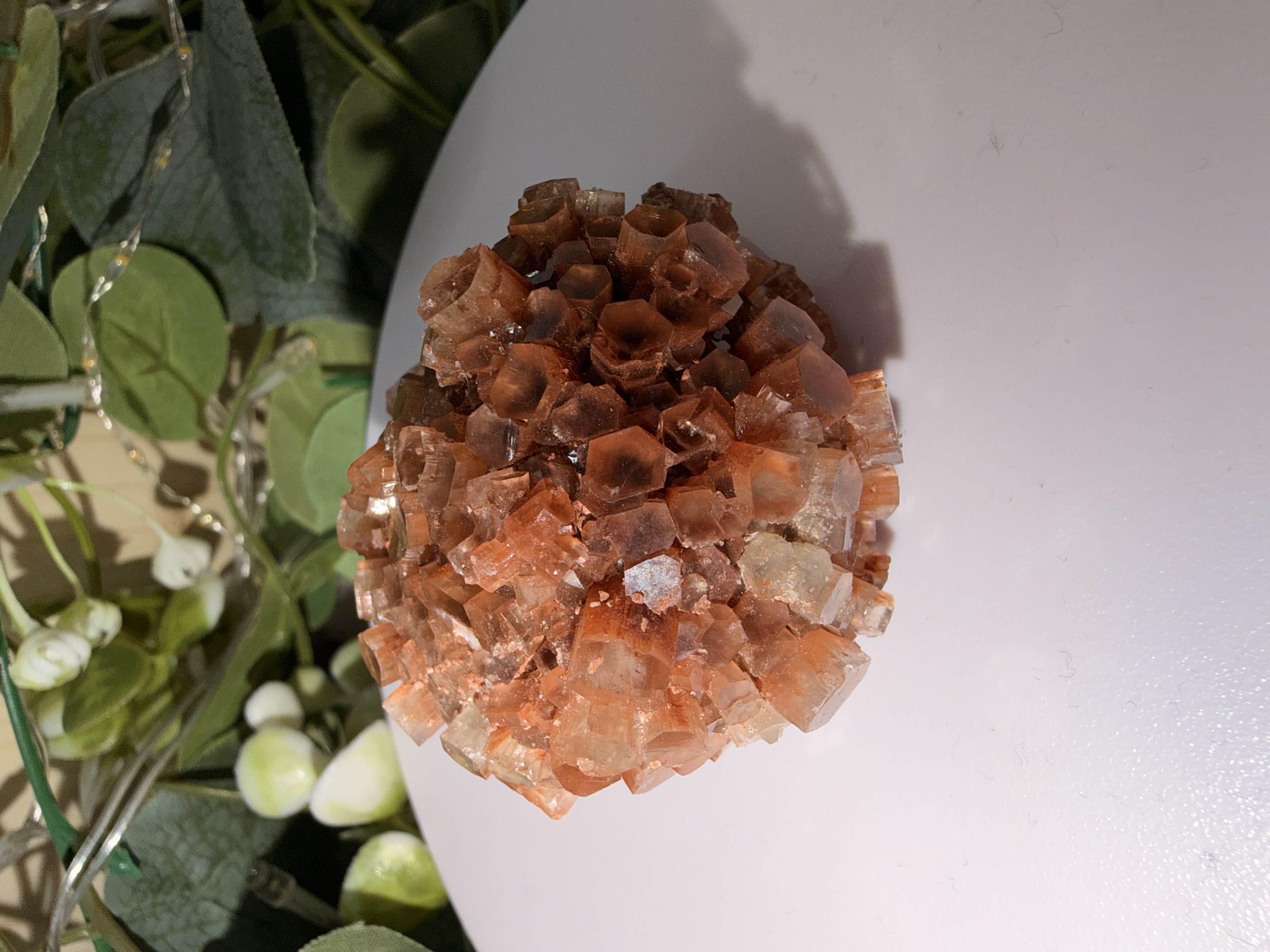
Aragonite is a calcium carbonate mineral best known for its delicate needles, radiating clusters and pseudo-hexagonal twinned crystals. It shares the same chemical formula as Calcite but has a different internal crystal structure, making it a distinct mineral species.

Formula: CaCO₃Mohs hardness: 3.5–4System: Orthorhombic
AragoniteCW

Meet the crystal

About Aragonite

Aragonite is one of the naturally occurring forms of calcium carbonate, CaCO₃. Although Aragonite and Calcite have exactly the same chemical formula, their atoms are arranged differently. Aragonite crystallises in the orthorhombic crystal system, whereas Calcite crystallises in the trigonal system. Minerals that share a chemical composition but have different crystal structures are known as polymorphs. Aragonite commonly forms as slender needles, radiating clusters, columnar growths, stalactitic formations and distinctive cyclic twins. Those repeated twins can create apparently six-sided crystals even though the mineral itself is orthorhombic. This pseudo-hexagonal appearance is one of Aragonite’s most recognisable features. The famous radiating clusters often sold as Sputnik Aragonite or Star Aragonite consist of crystals growing outward in multiple directions from a central point, giving them a starburst appearance. The mineral was named in 1797 by Abraham Gottlob Werner after Molina de Aragón in Spain, the area associated with its type locality. Interestingly, later writers sometimes assumed the name referred to the wider Aragón region, but Mindat notes that Werner specifically named it after Molina de Aragón.
Explore this passport

Showing Science & Formation

Scientific passport

The mineral facts

Observable and measurable properties used to describe and identify this mineral.

Chemical formula
CaCO₃
Mineral class
Carbonate — Aragonite Group
Crystal system
Orthorhombic
Mohs hardness
3.5–4
Lustre
Vitreous to resinous
Streak
White
Specific gravity
Approximately 2.94–2.95
Transparency
Transparent to translucent

Common colours

Colourless, white, grey, cream, yellow, brown, reddish, orange, green, blue and violet depending on impurities and inclusions

Cleavage and fracture

Distinct cleavage on one plane, with other cleavage directions much less pronounced; typically sub-conchoidal to uneven fracture

From the Earth

How it forms

The geological processes that create this crystal over time.

Formation

Its geological story

Aragonite commonly forms in low-temperature, near-surface environments where calcium-rich fluids precipitate calcium carbonate. It can develop in caves as stalactites and other speleothems, around hot springs, in marine sediments, in evaporitic environments and in mineral veins. Aragonite also forms biologically. Many marine organisms build shells or skeletal structures from Aragonite, including corals and numerous molluscs. The mineral can form under conditions where Aragonite is initially favoured over Calcite even though Calcite is generally the more stable form of calcium carbonate at ordinary surface conditions. Over geological time, Aragonite may therefore transform into Calcite. Mindat describes Aragonite as metastable relative to Calcite and notes that environmental changes can promote this conversion.

A closer look

Scientific notes

Aragonite is a genuine mineral species and the principal member of the Aragonite Group. Its most important scientific relationship is with Calcite. Both minerals are: CaCO₃ But: Aragonite = orthorhombic Calcite = trigonal This difference in atomic structure causes them to have different crystal shapes, densities and physical behaviour despite their identical chemical composition. Aragonite is denser than Calcite, with a specific gravity around 2.95 compared with approximately 2.71 for Calcite. Cyclic twinning is extremely common in Aragonite. Several orthorhombic crystals can intergrow in repeated orientations, creating pseudo-hexagonal prisms or radiating forms.

From the Forever SnS collection

Shop products featuring Aragonite

Each listing shows the actual product details, photographs and current availability.

Browse all crystals →

Passport complete

Who shall we meet next?

Return to Crystal World